The transportation and logistics industry is entering a new era in which technology is part of everyday operations. From real-time vehicle tracking and artificial intelligence (AI) to predictive maintenance and digital transport management platforms, new tools are changing how transport businesses operate, manage risk and deliver goods.
For decades, transport businesses have relied on phone calls, paper registers, spreadsheets and experience. But growing operational complexity, rising fuel and maintenance costs, tighter delivery expectations and road-safety concerns are pushing transporters towards digital solutions.
In its March 2026 article, The Technology Signals Reshaping Transportation Risk in 2026, specialty insurance firm Jencap describes how telematics, predictive maintenance, autonomous trucking, electrification and AI-powered logistics are moving out of pilot programmes, and how they are changing the way insurers assess fleet risk.
Some of these technologies are still developing, while others are already part of commercial transport. For Indian transporters, understanding the difference matters: it helps improve operational visibility, control costs and prepare the business for what comes next.
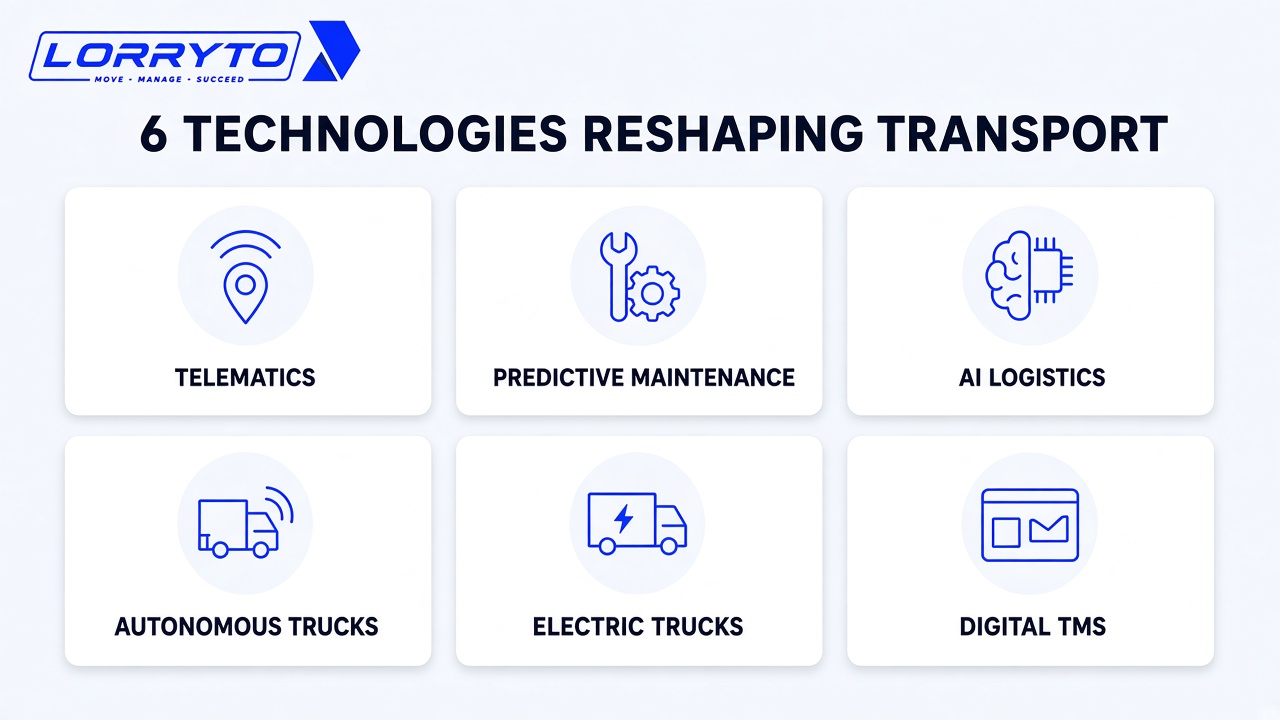
1. Telematics and real-time vehicle tracking
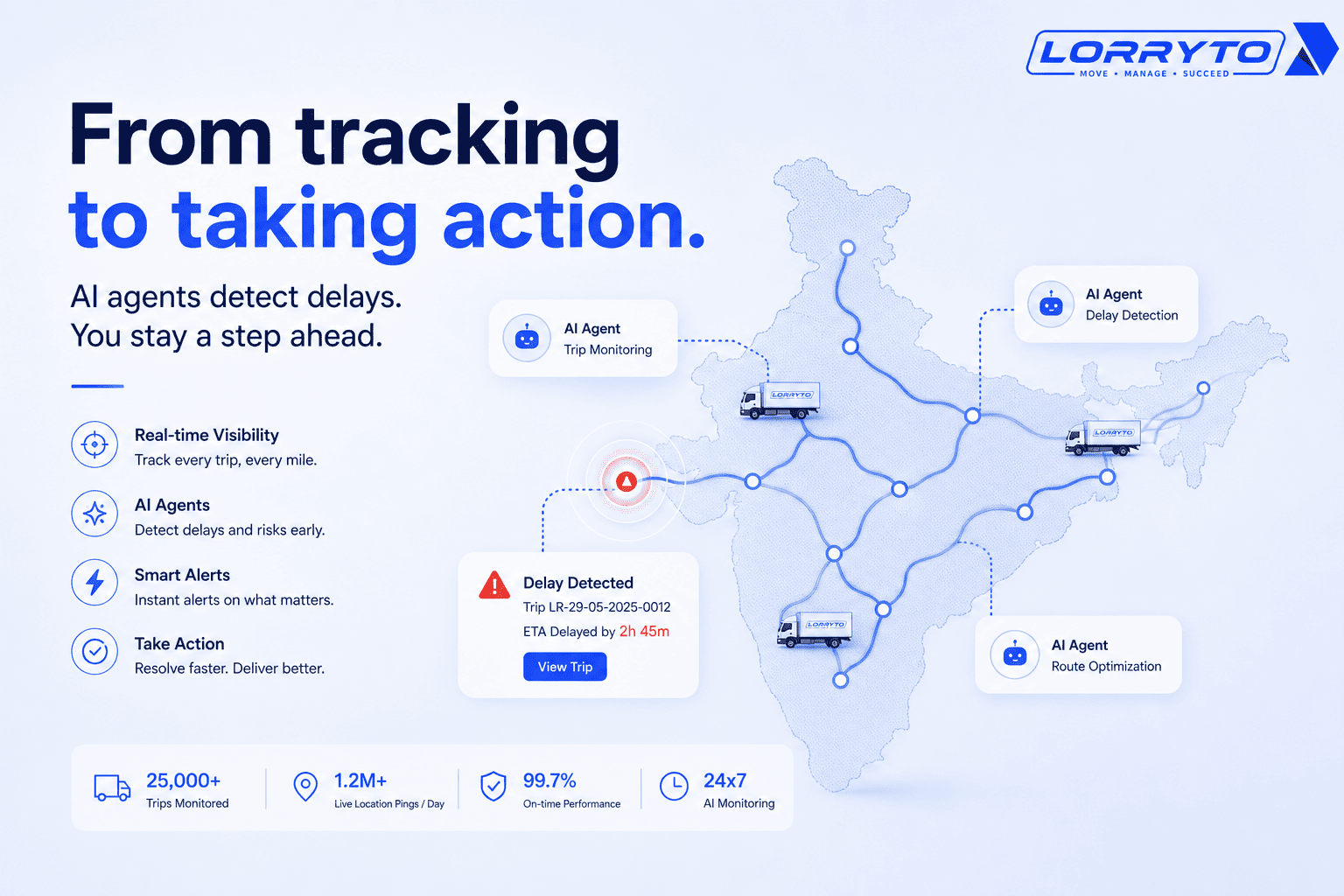
Vehicle tracking has evolved beyond knowing where a truck is. Modern telematics systems combine telecommunications, GPS and vehicle data to show vehicle movement, trip progress, driving patterns, fuel usage (where vehicle data supports it) and fleet performance. Jencap notes that telematics platforms can capture speed, braking patterns, idle time, route consistency and driver behaviour, and that such systems are now close to universal across US commercial fleets.
For transporters, telematics can help with:
- Real-time vehicle visibility: monitor vehicle locations and trip progress.
- Route monitoring: spot route deviations and unexpected delays.
- Driver behaviour insights: review available data on speeding, harsh braking and idling.
- Operational coordination: improve communication between the office, drivers and customers.
- Trip transparency: keep a record of vehicle movement and trip activity.
In India, vehicle tracking is also backed by regulation. The Ministry of Road Transport and Highways (MoRTH) has mandated vehicle location tracking devices with emergency buttons for new public service vehicles registered from 1 January 2019, built to the AIS-140 standard. For goods vehicles, a 2022 notification requires N2 and N3 category vehicles carrying dangerous or hazardous goods to be fitted with AIS-140 tracking devices.
For commercial fleet owners, digital tracking supports better-informed decisions, reduces uncertainty about where vehicles are and gives customers more transparency. We explored how on-vehicle intelligence is growing in The Intelligent Truck Is Here.
Tracking alone, however, does not guarantee safer driving or lower costs. Its value depends on how well the business acts on the information.
2. Predictive maintenance: preventing breakdowns before they happen
Unexpected breakdowns disrupt deliveries, raise repair costs, delay payments and strain customer relationships. Traditional maintenance relies on fixed service schedules or on repairs after something has already failed.
Predictive maintenance takes a data-driven approach. Using sensors, vehicle diagnostics and historical service records, these systems look for patterns that may signal a developing mechanical problem. Depending on the equipment fitted, they can monitor engine performance, temperature, vibration, tyre pressure and brake wear.
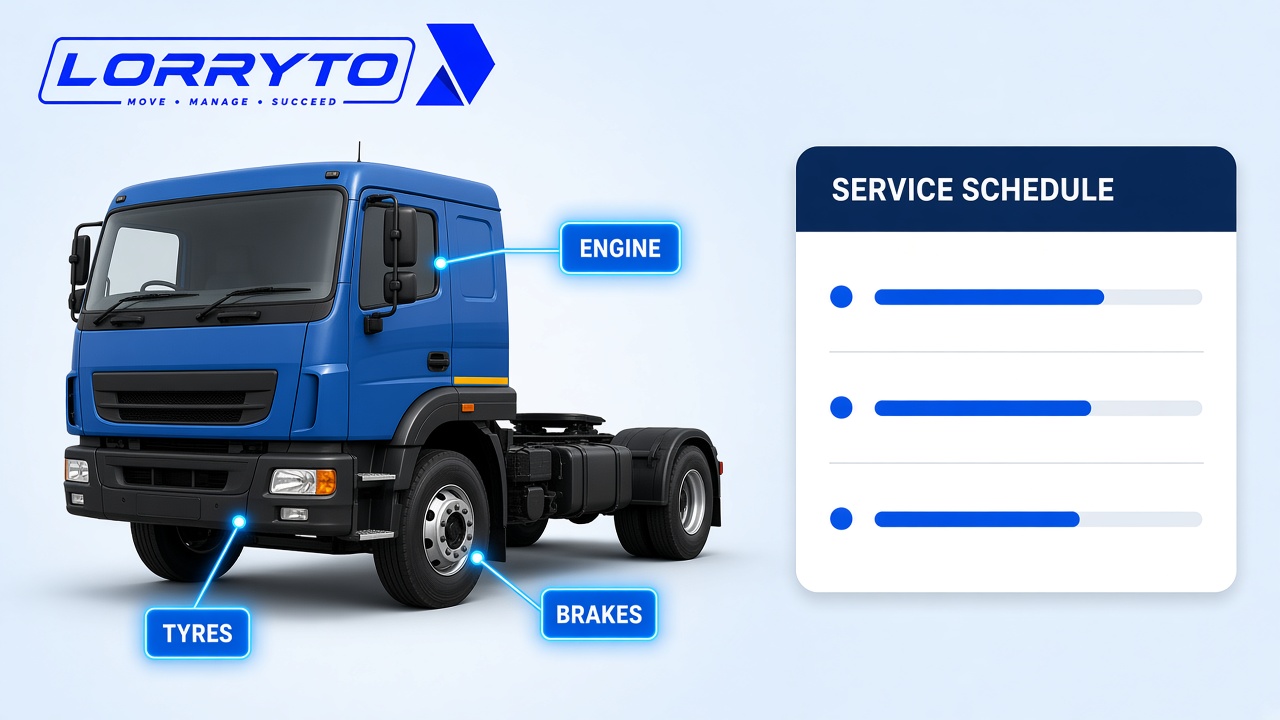
Key benefits can include:
- Identifying potential mechanical issues earlier.
- Planning maintenance around vehicle availability.
- Reducing unplanned downtime.
- Keeping better maintenance records.
- Budgeting more accurately for repairs and replacements.
Jencap points out that fleets using predictive maintenance may demonstrate stronger operational discipline, which gives insurers a clearer picture of equipment-related risk.
The same idea is reaching Indian road infrastructure. In June 2026, the National Highways Authority of India (NHAI) announced a shift to predictive asset management for national highways, combining network survey vehicles, drone analytics, AI-powered dashcam analytics and pavement testing in a centralised data ecosystem to detect deterioration early and intervene before problems become critical.
For Indian transport businesses, a practical starting point is simpler: keep digital service records, log repair expenses, monitor vehicle document expiry and schedule routine inspections. Sensor-based systems can follow as the fleet grows.
The key takeaway: maintenance data is most useful when it leads to timely action, not when it is simply collected and stored.
3. Artificial intelligence and smart logistics management
AI is opening new possibilities in logistics planning, route optimisation and operational decision-making. AI-powered platforms can analyse large volumes of data, find patterns and support decisions that would otherwise take significant manual effort.
Common applications include:
- Route optimisation: evaluating routes using traffic, distance, delivery schedules and other available data.
- Demand forecasting: using historical trends to estimate future transport requirements.
- Intelligent dispatching: helping allocate vehicles and drivers within operational constraints.
- Delay prediction: combining historical and live data to flag likely disruptions.
- Document processing: extracting key details from invoices, consignment notes and other transport documents.
Jencap highlights AI analytics in transport management systems, which can adjust delivery schedules for traffic and reroute shipments around weather, as well as “digital twins”, which are virtual models of distribution networks that simulate how operational changes affect performance. We looked at how AI is moving from reporting to action in Agentic AI in Transportation.
For small and medium transporters, AI adoption does not have to mean expensive enterprise systems. Digitising bookings, trip details, vehicle records, expenses and customer information is the first step towards the structured data that advanced analytics need.
AI should support human decisions, with transport managers keeping oversight of important operational and financial calls.
4. Autonomous trucking and the future of freight
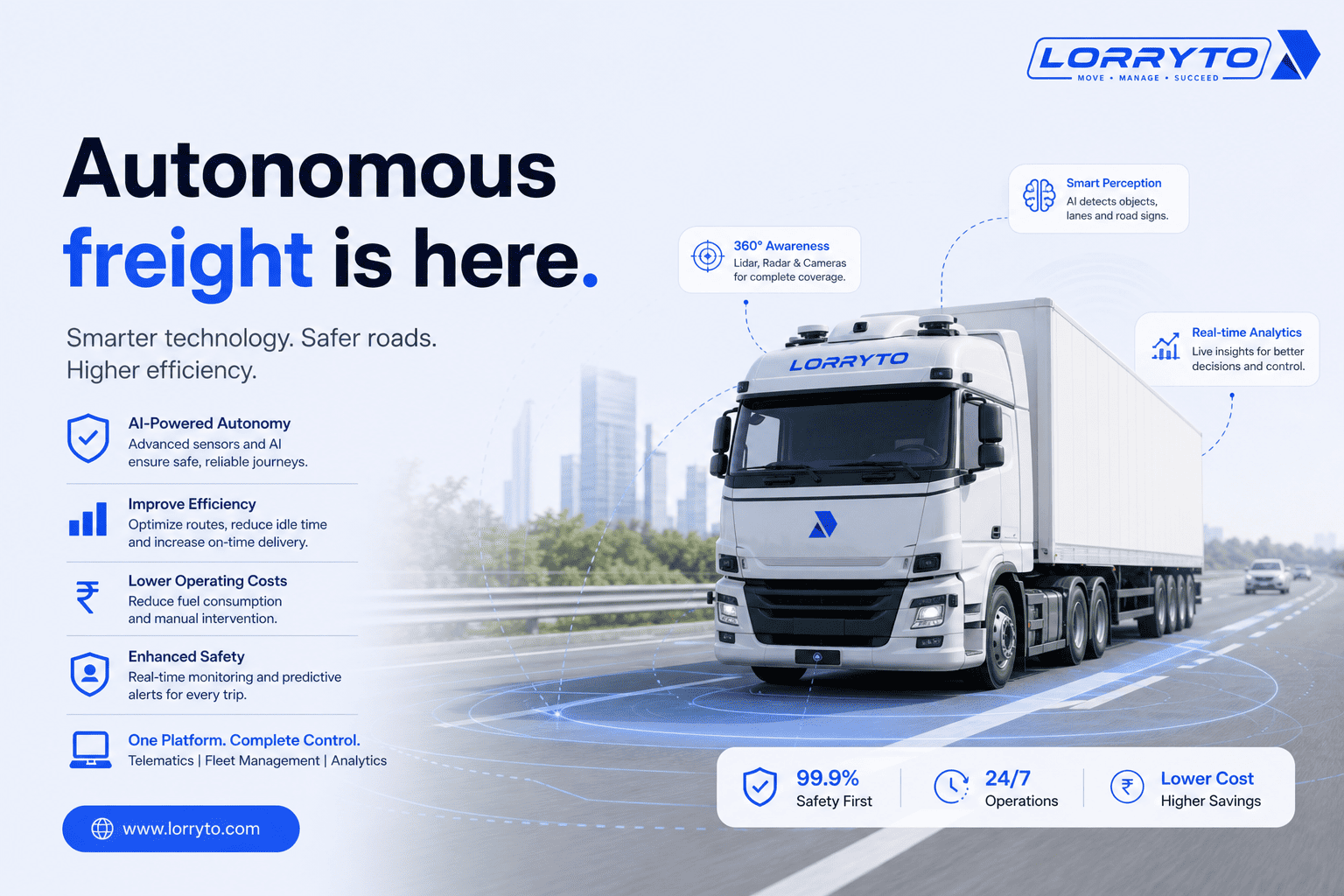
Autonomous trucking is one of the most significant developments being explored in global transport. Autonomous vehicles combine cameras, radar, lidar, sensors, computing systems and AI to perceive their surroundings and perform driving tasks with varying levels of automation.
According to Jencap, several technology companies have deployed driverless trucks on specific freight corridors in Texas and Arizona, typically on hub-to-hub routes between distribution centres where conditions are predictable. Even there, fleets usually keep safety operators, remote monitoring teams and tightly structured route parameters.
Potential applications include:
- Long-distance freight on suitable, well-defined routes.
- Automated driving assistance.
- Better monitoring of vehicle movement.
- Consistent operations in controlled environments.
Autonomous trucking also raises important questions about safety validation, regulation, liability, cybersecurity, infrastructure and supervision. We covered real-world deployments in more detail in The Driverless Truck Is No Longer a Future Idea.
For India, widespread autonomous freight would need careful consideration of road conditions, mixed traffic, infrastructure and regulation. For now, it is best seen as a development to monitor rather than a technology every Indian transporter needs to adopt today.
5. Electric trucks and fleet electrification
Electrification is gradually changing the commercial vehicle landscape, especially in urban delivery, short-haul and selected regional operations. Jencap notes that light- and medium-duty electric trucks are now widely used in last-mile delivery, while manufacturers develop heavy-duty platforms for longer regional routes.
Electric trucks offer a different cost structure from diesel vehicles, but suitability depends on route, payload, charging access, vehicle cost and daily utilisation. Key considerations include:
- Acquisition cost: electric commercial vehicles can cost more upfront, largely because of battery systems.
- Charging infrastructure: operators need adequate charging capacity and reliable electricity.
- Range: route planning must reflect real-world range under load.
- Maintenance: electric vehicles need different servicing from diesel trucks.
- Downtime and repairs: specialised technicians and facilities may be required.
Jencap also flags new insurance considerations: higher equipment values, battery-related exposure, repair severity and risks linked to high-capacity charging infrastructure.
In India, the electric freight transition is picking up pace. We covered this in Electric Trucks Are Leaving the Pilot Stage and in our look at PACT and the ZET Marketplace. Electrification decisions should be based on route requirements, utilisation, charging access and total cost of ownership, not on trends alone.
6. Digital fleet management and transportation management systems
Digital fleet management is becoming central to transport operations. Transporters increasingly need one place to manage bookings, trips, vehicles, drivers, documents, expenses and payments.
Manual operations make it hard to see trip profitability, follow up on outstanding payments, keep accurate records and coordinate many vehicles at once. A Transportation Management System (TMS) brings these functions together.
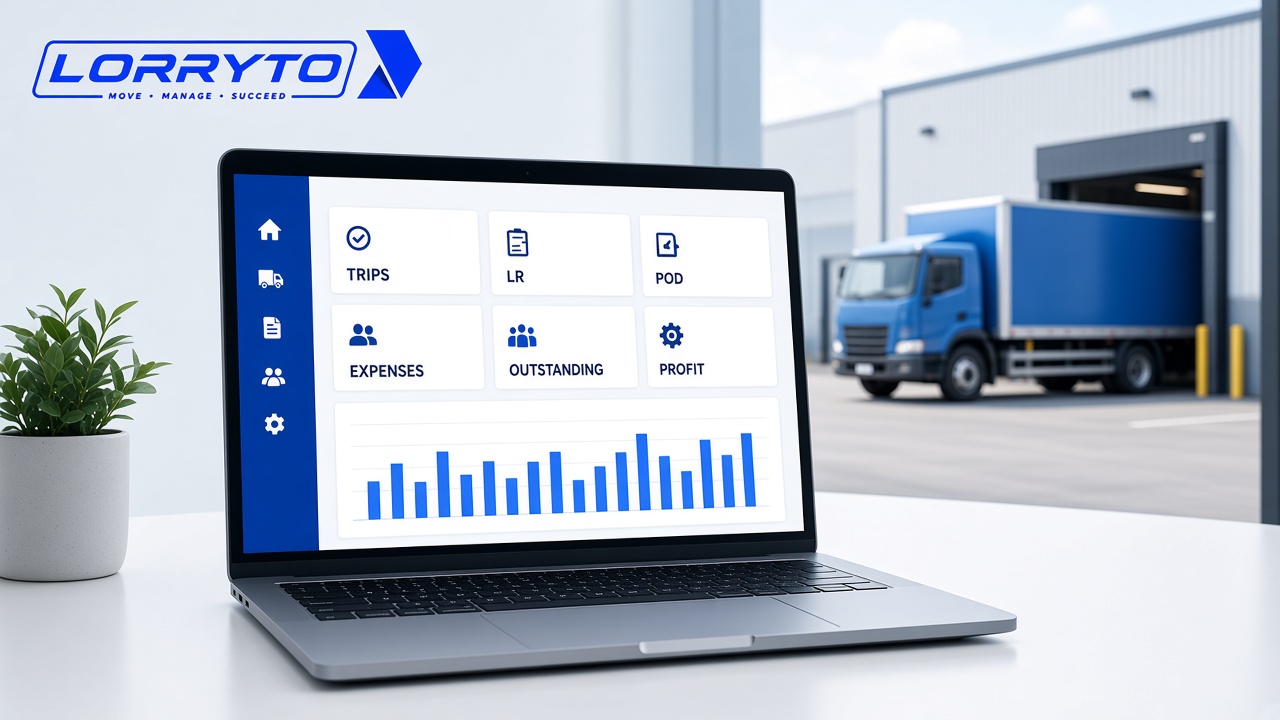
A modern TMS may include:
- Booking and Lorry Receipt (LR) management.
- Trip and load management.
- Vehicle and driver records.
- Vehicle location visibility.
- Proof of Delivery (POD) and document storage.
- Vehicle and trip expense management.
- Customer invoicing and payment tracking.
- Supplier and credit shop outstanding management.
- Trip-wise profit and loss reporting.
- Document expiry alerts.
- Multi-branch operational visibility.
A centralised system reduces repeated data entry, makes information easier to find and helps management understand operational and financial performance. For example, when revenue, diesel, tolls, maintenance and other trip expenses sit together, it becomes much easier to see the real profit of each trip.
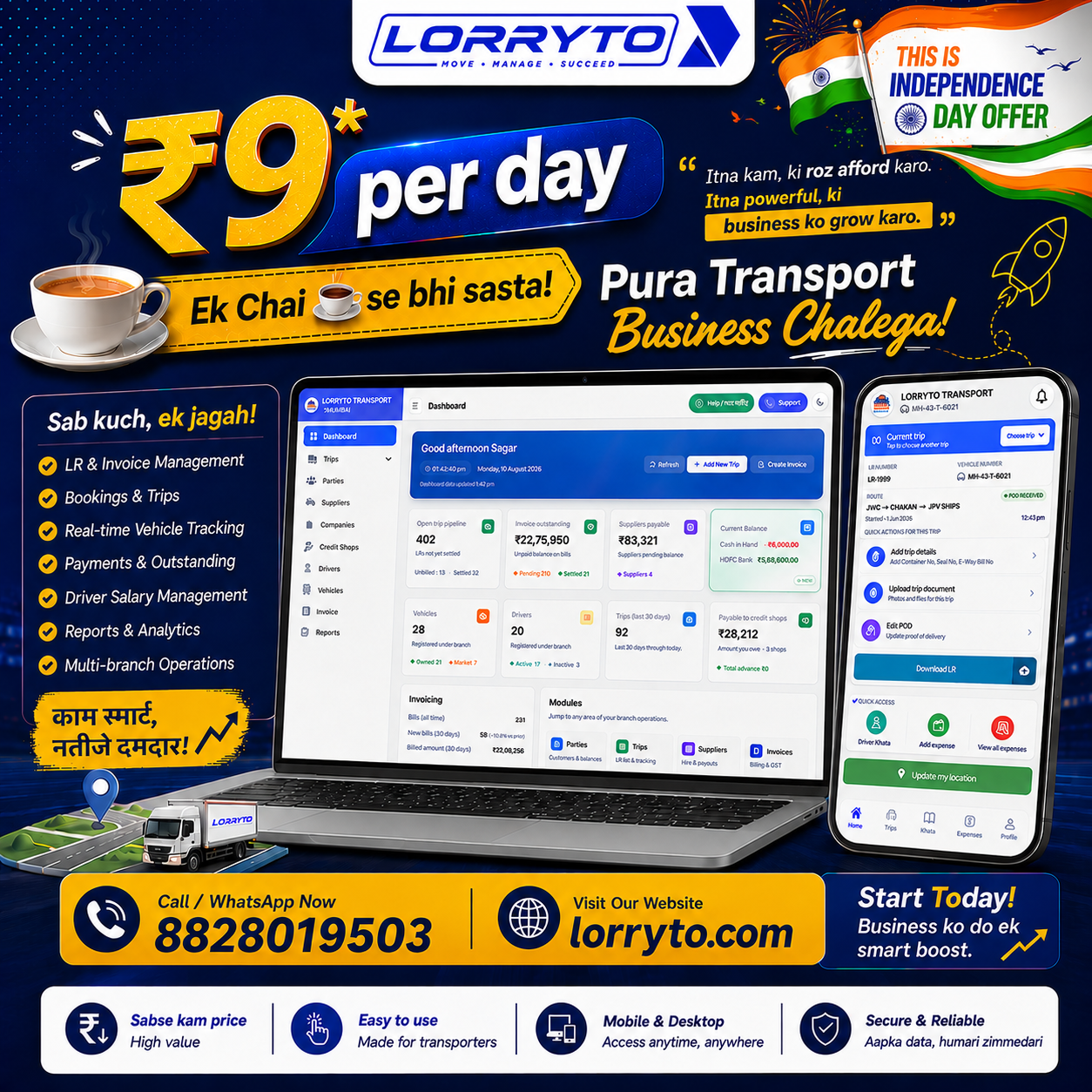
This is where platforms such as Lorryto fit in. Lorryto helps transport businesses manage LRs, trips, PODs, invoices, expenses and outstanding payments in one place, with trip-wise profit, vehicle document expiry alerts and multiple branches. It also helps track vehicle locations when drivers share GPS, visible from the Vehicles list. See how to manage trip tracking digitally for a practical walkthrough.
Digital fleet management is not just about replacing paperwork. It creates a consistent flow of information between the office, drivers, vehicles and customers.
7. Data-driven risk management and transport insurance
Transport risk depends on driver behaviour, vehicle condition, road conditions, cargo handling and operating procedures. Historically, fleet risk assessments relied mainly on past claims, inspections and other historical records. Telematics and digital fleet systems add a view of day-to-day operations.
Jencap describes how underwriters increasingly use fleet data, including telematics, maintenance practices, safety reviews and driver assistance systems, to distinguish fleets with strong safety practices from those with higher operational risk.
Digital records can help transport businesses demonstrate:
- Vehicle inspection and maintenance history.
- Driver training and safety procedures.
- Trip activity and vehicle utilisation.
- Incident and document records.
- Corrective actions taken after an operational issue.
These records support internal risk reviews and are useful in insurance discussions. However, adopting tracking or fleet software does not automatically guarantee lower premiums or claim approvals. Insurance decisions depend on the insurer, policy terms, risk profile and underwriting criteria.
8. Connected vehicles, safety systems and regulation
Connected vehicle technologies create new opportunities to improve safety and operational awareness.
Advanced Driver Assistance Systems (ADAS) can offer lane departure warnings, forward collision alerts and automatic emergency braking, depending on the vehicle. Vehicle location tracking, emergency alerts and connected monitoring platforms also support incident response and fleet coordination.
In India, AIS-140 provides the regulatory foundation for vehicle location tracking and emergency alerts. Under the Nirbhaya Framework, MoRTH has supported States and Union Territories in setting up monitoring centres that track public service vehicles fitted with location devices and emergency buttons. Separately, the AIS-140 requirement extends to specified goods vehicles carrying dangerous or hazardous goods.
Transport businesses should check the requirements that apply to their vehicle category, operation and state.
Technology can assist safety management, but it cannot replace responsible driving, proper training, regular inspections or compliance with the rules.
9. Why digital transformation matters for Indian transporters
India’s transport industry ranges from single-truck owners to large multi-branch fleet operators, and their needs and budgets vary widely.
For smaller transporters, digital transformation can start with simple steps: electronic trip records, digital invoices and tracking outstanding payments. As the business grows, more integrated tools help manage multiple vehicles, drivers, branches and customers. We explored this shift in How Technology Is Changing the Way India Moves Goods.
How transporters can start adopting technology
- Digitise daily operations: move bookings, LRs, trips and invoices into a centralised system.
- Improve vehicle visibility: use tracking tools and keep trip status up to date.
- Organise maintenance: keep vehicle-wise service schedules, repair history and expense records.
- Monitor financial performance: review trip profitability, outstanding payments and operating costs.
- Build reliable data: keep accurate, consistent records that can support future analytics and automation.
- Adopt advanced tools gradually: evaluate AI, sensor-based maintenance and other technologies against business needs and return on investment.
The goal is not to adopt every new technology at once. It is to choose tools that solve real problems, that staff can actually use and that deliver measurable value.
10. The road ahead: what to expect beyond 2026
Digital transformation in transport will continue as vehicle technology, connectivity, analytics and automation mature. Areas to watch include:
- More connected fleets: tighter integration between vehicles, tracking platforms and transport management systems.
- Advanced analytics: wider use of operational data for maintenance, route planning and business decisions.
- Smarter safety monitoring: more driver assistance, alerts and vehicle monitoring.
- Greater automation: more automated dispatching, document processing and reporting.
- Integrated logistics platforms: better coordination between transporters, customers, suppliers, drivers and other stakeholders.
Infrastructure is changing too. Projects such as the fully operational Western Dedicated Freight Corridor are reshaping how freight moves between ports and inland markets, and they raise expectations for road transporters to offer the same visibility on the first and last mile.
The pace of adoption will differ across markets and fleet sizes. Infrastructure, investment, regulation, data quality and staff readiness will all shape how quickly these technologies become routine. For Indian transporters, building strong digital foundations today makes it easier to evaluate and adopt more advanced solutions tomorrow.
Conclusion
Technology is turning transport from a largely manual, experience-driven industry into one where real-time information, digital records and data-supported decisions play a growing role.
Telematics is improving fleet visibility. Predictive maintenance is enabling proactive vehicle care. AI is opening new possibilities for logistics planning. Electrification and autonomous trucking bring new opportunities, along with new operational questions.
For Indian transport businesses, digital transformation doesn’t have to start with expensive or complex technology. It can start with better trip management, organised vehicle records, digital documentation, expense tracking and clearer financial visibility.
Businesses that understand their operational data, and use technology to solve real-world problems, will be best placed to adapt as the industry evolves. If you are ready to take that first step, getting started with Lorryto is a practical place to begin.
Editorial note: This is an independently written industry overview informed by the sources below. The Jencap article focuses on the US transportation insurance market; this piece adapts its technology themes for Indian transport businesses. Regulatory requirements and technology availability vary by vehicle category, state and operating conditions.
Related reading
- Agentic AI in Transportation: From Tracking What Happened to Taking Action
- The Driverless Truck Is No Longer a Future Idea: How Autonomous Freight Is Moving Into Real-World Operations
- Electric Trucks Are Leaving the Pilot Stage: Is India Ready for Electric Freight Corridors?
- The Intelligent Truck Is Here: How AI Is Changing the Way Trucks Work
- How Technology Is Changing the Way India Moves Goods
- How to Manage Every Trip Profit Digitally for Indian Transporters
- Vehicles list — location, KPIs, and fleet visibility
Sources: Jencap — The Technology Signals Reshaping Transportation Risk in 2026 · PIB — VLT devices and emergency buttons for public service vehicles · PIB — AIS-140 tracking for vehicles carrying hazardous goods · The Hindu — State monitoring centres under the Nirbhaya Framework · PIB — NHAI predictive asset management for national highways
Ready to run trips without registers?
Create LRs, track payments, and keep documents in one place with Lorryto — free trial available.
Start Free Now