For years, the idea of a truck driving without a person behind the wheel sounded like something from the distant future.
Today, that future is starting to look much more practical.
Autonomous trucks are moving beyond controlled demonstrations and testing into real freight operations. Companies are beginning to use autonomous systems on selected commercial routes, while truck manufacturers, logistics companies and technology providers are building the infrastructure needed to scale them.
In May 2026, Volvo Autonomous Solutions and DSV announced the start of autonomous freight operations in Texas, including a commercial truckload between Dallas and Houston. In the initial phase, a safety driver remains in the vehicle while the companies build operational experience on the lane.
Aurora has also moved into driverless commercial operations, with trucks operating without a person behind the wheel and plans to scale its driverless fleet.
And on September 3, 2026, autonomous trucking software company PlusAI announced plans to go public through an approximately $800 million SPAC deal — another sign that autonomous trucking is moving from long-term experimentation toward a commercial industry.
So, what is actually changing?
From driver assistance to driverless trucks
Autonomous trucking did not appear overnight.
The industry has been moving through several stages.
First came basic electronic systems such as cruise control and automatic braking. Then came advanced driver-assistance systems that could help with lane keeping, collision avoidance and highway driving.
Now, the industry is moving toward systems that can perform the entire driving task in specific operating conditions.
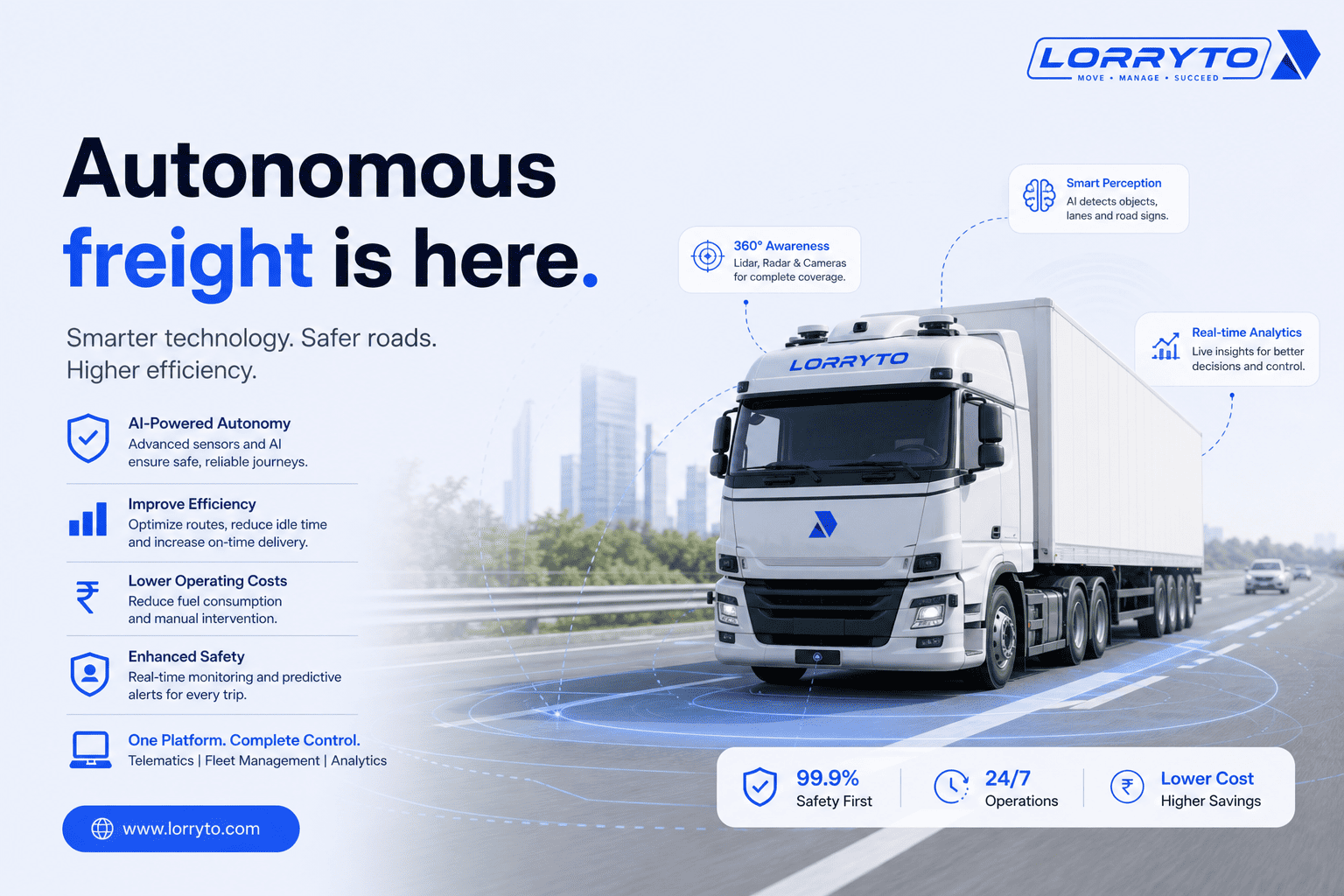
These trucks use a combination of cameras, radar, LiDAR, GPS, onboard computing and artificial intelligence to understand their surroundings and make driving decisions.
The important difference is that the truck is no longer simply helping the driver.
In a properly defined autonomous operation, the technology becomes responsible for driving the vehicle.
That is a major change for the transportation industry.
Why freight is one of the first places autonomous vehicles are being used
It may seem surprising that large trucks are becoming an important use case for autonomous driving.
But freight has several characteristics that make it suitable for the technology.
Long-haul trucking often involves predictable highway routes, repeated lanes and extended driving periods. These conditions can be easier to automate than the unpredictable environment of busy city streets.
There is also a strong economic reason.
A truck that can operate for longer periods without being limited by human driving hours could potentially improve vehicle utilisation and increase available freight capacity.
Aurora, for example, reported that some of its driverless trucks operating for Werner were averaging more than 4,000 miles per week during early commercial operations.
This does not mean autonomous trucks will immediately replace conventional trucking.
Instead, the first major opportunity is likely to be using autonomous technology on suitable routes while humans continue to handle the more complex parts of the journey.
The first commercial model will not look like science fiction
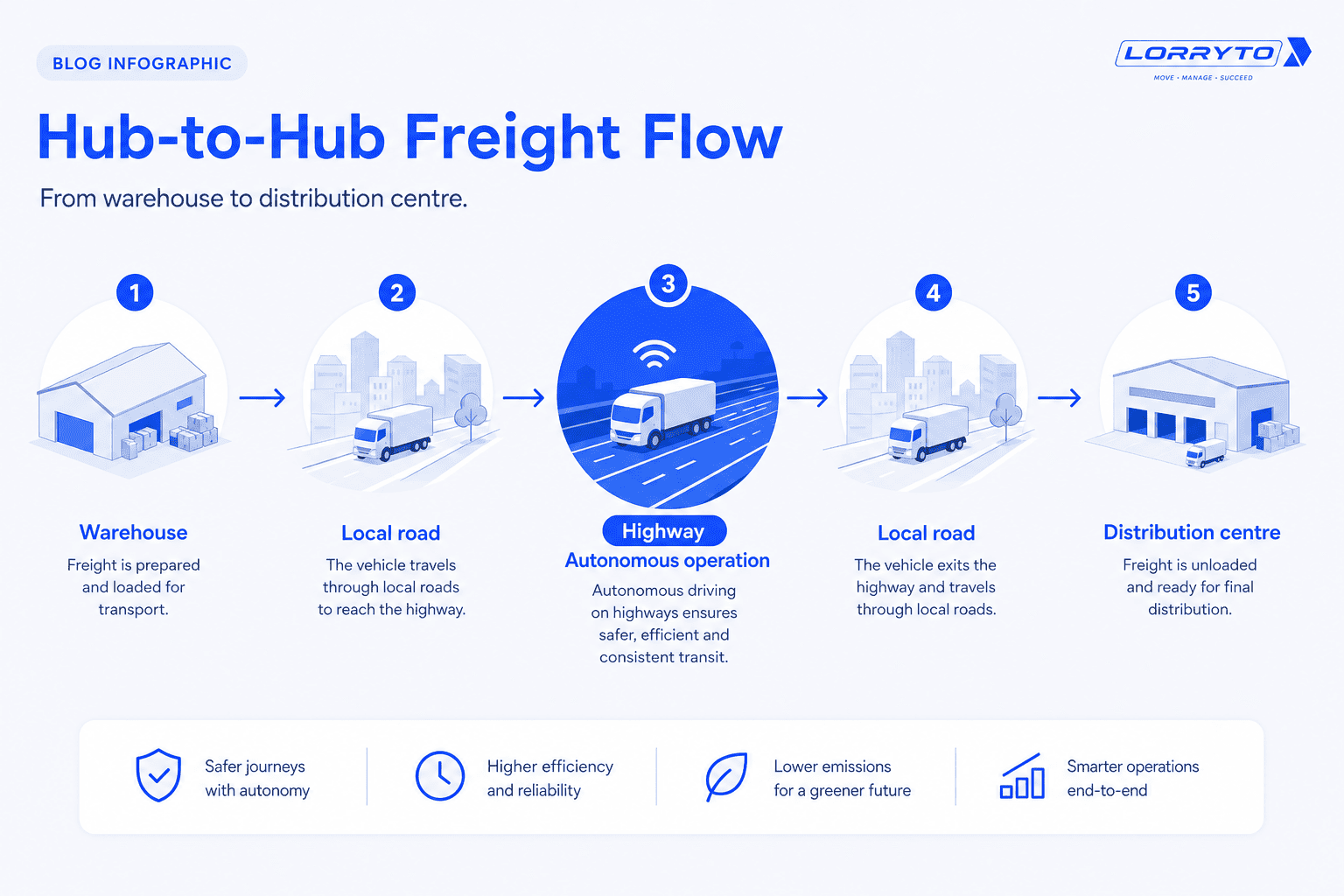
One common misconception is that autonomous trucking means a truck leaves a warehouse completely alone and arrives at another warehouse with nobody involved.
Real-world operations are more complicated.
A more realistic model is a combination of autonomous driving and human-supported logistics.
For example:
Warehouse → Local road → Highway → Autonomous highway operation → Local road → Distribution centre
The autonomous system may handle the long highway portion, while people and other systems support activities at terminals, loading areas, fueling locations and more complicated sections of the journey.
Aurora has already been testing activities such as weigh-station navigation and fueling at truck stops as part of its effort to make driverless freight operations work beyond simply driving on highways.
This is an important point.
The challenge is not simply teaching a truck how to drive.
The bigger challenge is building an entire autonomous freight operation around the truck.
The truck is only one part of the system
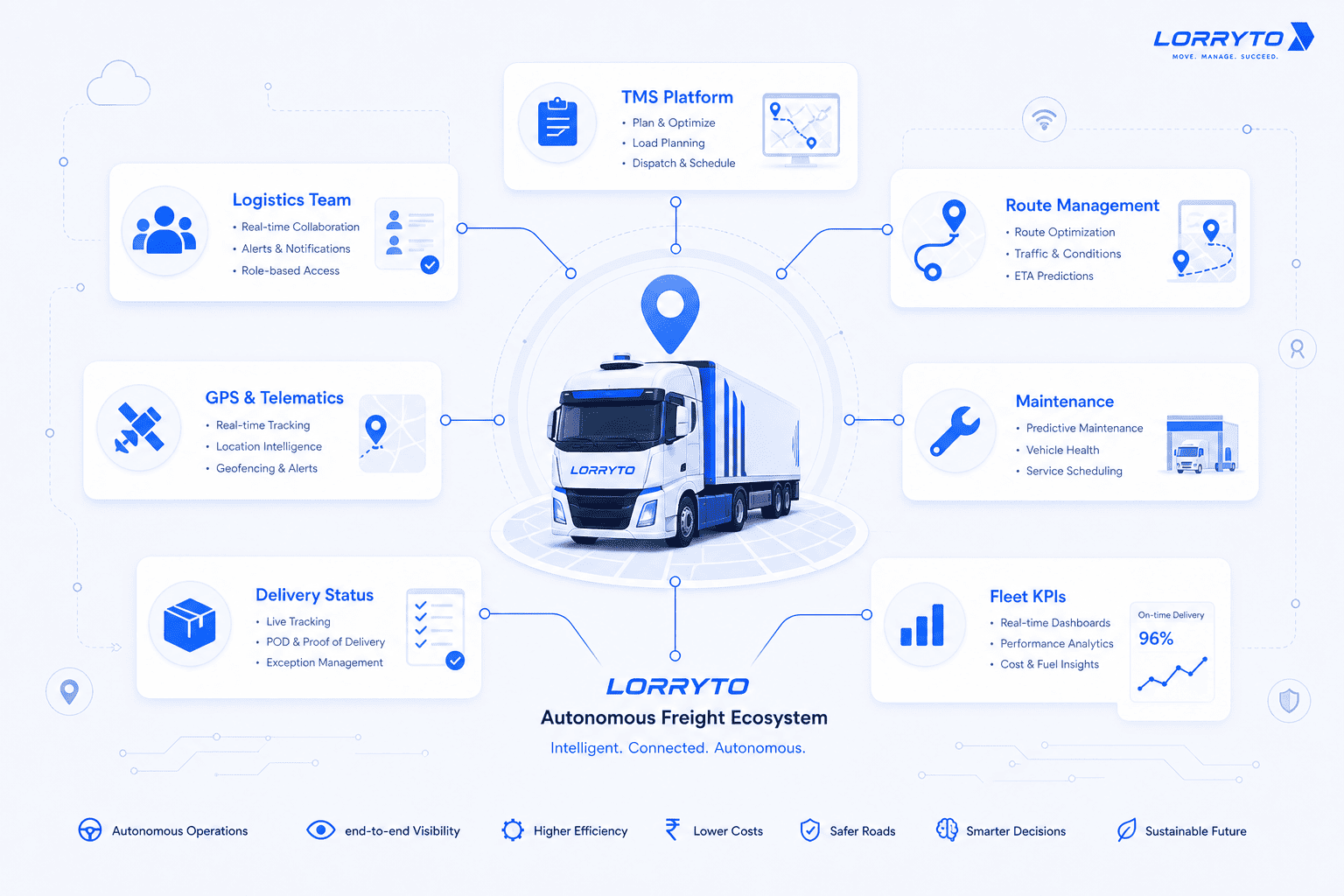
A driverless truck still needs to know:
- Where it needs to go
- Which route it should take
- Where the shipment is
- When it should arrive
- What to do when something changes
- Where it should stop
- When it needs maintenance
- How to communicate with the logistics team
- What happens if the vehicle cannot continue
This means autonomous transportation will depend heavily on digital infrastructure.
Fleet management systems, GPS data, routing platforms, telematics, transportation management systems and operational dashboards will become increasingly important.
As Gartner noted in its 2026 supply-chain technology outlook, physical AI is bringing AI together with sensors, robotics and connected physical systems to enable real-time sensing, analysis and execution across supply-chain operations.
The future of autonomous freight, therefore, is not just about making a truck drive itself.
It is about connecting the truck to the rest of the transportation network.
What happens when something goes wrong?
This is one of the biggest questions around autonomous trucking.
Roads are unpredictable.
A vehicle can encounter an accident, road construction, unusual weather, unexpected obstacles or a situation that its system has never experienced before.
Autonomous trucking companies therefore need systems that can identify situations where the vehicle should slow down, stop safely or request human assistance.
Safety is also one of the reasons autonomous trucking is initially focusing on specific routes and operating environments instead of trying to drive everywhere.
The technology has to prove that it can handle real-world situations consistently before companies can scale it across larger networks.
This is why the move from testing to commercial operations is so significant.
The industry is no longer asking only, “Can an autonomous truck drive?”
The question is becoming:
“Can an autonomous truck operate reliably as part of a real freight business?”
What does this mean for truck drivers?
The arrival of autonomous trucks naturally raises concerns about the future of driving jobs.
But the transition is unlikely to happen all at once.
For the foreseeable future, human drivers will continue to play an important role in transportation, particularly in local deliveries, difficult routes, customer locations and situations requiring human judgement.
Autonomous technology could instead change where human drivers spend their time.
A driver may eventually handle the complex first and last parts of a journey while autonomous systems manage long, repetitive highway sections.
In that model, technology is not simply replacing the driver.
It is changing the role of the driver.
The same transition is already visible in other areas of transportation, where technology is gradually taking over repetitive tasks while people focus on decisions, exceptions and customer-facing work — a theme we also explored in our post on Agentic AI in transportation.
Autonomous trucks will also change fleet management
This is where the impact becomes particularly interesting for transport businesses.
When vehicles become more automated, fleet managers will have even more operational data to manage.
They will need visibility into vehicle location, trips, utilisation, operating costs, maintenance and overall performance.
A fleet manager may not always need to ask:
“Where is my driver?”
Instead, the question could become:
“Where is my vehicle, what is it doing, and is the operation progressing as planned?”
That requires a strong digital foundation.
Platforms such as Lorryto already help transport businesses bring important fleet information into one place, including live vehicle location when drivers share GPS, trip information and vehicle-level financial tracking on the Vehicles list.
As transportation becomes increasingly connected — from digital trip tracking to AI-powered location intelligence — this kind of operational visibility will become even more important.
Autonomous freight does not remove the need for that foundation.
It makes it more essential.
India: Is autonomous trucking ready yet?
India presents a very different environment from the highways where autonomous trucking is currently being commercialised.
Indian roads can involve mixed traffic, two-wheelers, pedestrians, animals, changing road conditions, unpredictable lane behaviour and highly variable driving environments.
That makes nationwide driverless trucking a much bigger challenge.
But that does not mean India should ignore the technology.
The first applications may be more practical and controlled.
For example:
- Dedicated industrial routes
- Ports and logistics parks
- Warehousing clusters
- Mining operations
- Factory-to-warehouse movement
- Controlled highways
- Repetitive long-distance freight corridors
These environments can provide more predictable operating conditions and allow companies to test autonomous systems gradually.
India’s transportation industry is already becoming more connected through GPS, telematics, digital freight platforms and fleet-management software.
Autonomous vehicles could become the next step in that evolution — after the intelligent truck layer that is already starting to take shape.
The bigger shift: From connected trucks to intelligent trucks
The transportation industry has already gone through several technology changes.
First, trucks became connected.
Then fleets became digitised.
Now vehicles are becoming increasingly intelligent.
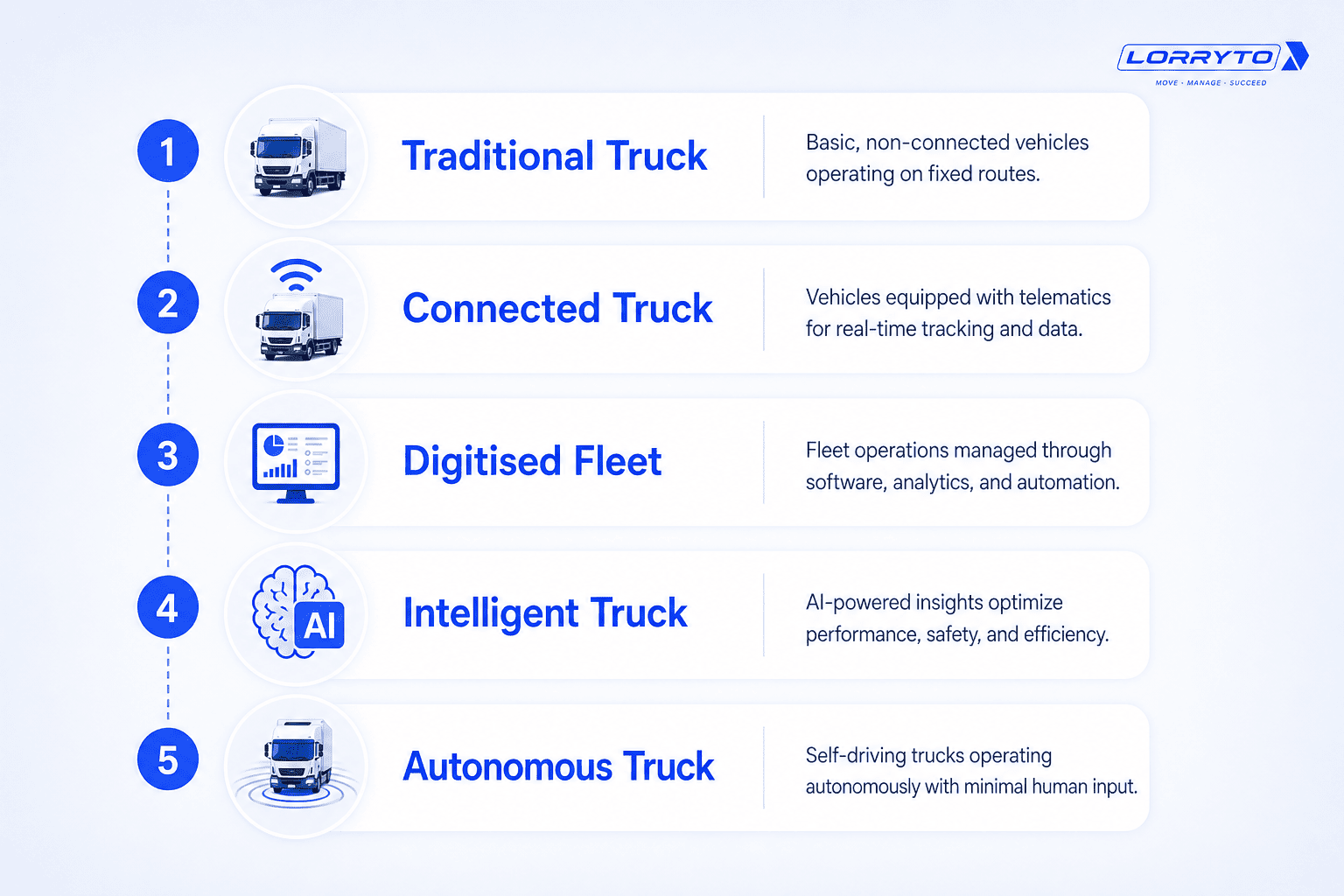
The progression looks something like this:
Traditional Truck → Connected Truck → Digitised Fleet → Intelligent Truck → Autonomous Truck
Each stage adds another layer of technology.
GPS tells us where the vehicle is.
Telematics tells us what the vehicle is doing.
Fleet-management software helps businesses manage the operation.
Artificial intelligence can analyse information and support decisions.
Autonomous driving technology takes the next step by allowing the vehicle itself to make driving decisions.
This is why autonomous trucking should not be viewed as an isolated innovation.
It is part of a much larger transformation in transportation.
The road ahead
Autonomous trucks are still at an early stage.
There are regulatory challenges, safety questions, infrastructure requirements, technology costs and public acceptance issues that need to be addressed.
But something important has changed.
The discussion is no longer purely about whether driverless trucks are technically possible.
They are already beginning to operate in real commercial freight environments.
Companies are testing business models, building routes, integrating autonomous vehicles with logistics networks and preparing for larger-scale deployment.
The road to fully autonomous freight will probably be gradual.
It will not happen with millions of driverless trucks appearing overnight.
Instead, it will start with specific routes, specific vehicles and specific use cases — and then expand as the technology becomes safer, more reliable and economically practical.
For transport businesses, the important question is therefore not simply:
“Will autonomous trucks replace traditional trucks?”
The better question is:
“Is our fleet and our business ready for a transportation industry that is becoming increasingly autonomous?”
Because the driverless truck is no longer just an idea for the future.
It has already started moving into the real world.
If you are still building that digital foundation — trips, vehicles, locations and costs in one system — getting started with Lorryto is a practical place to begin.
Related reading
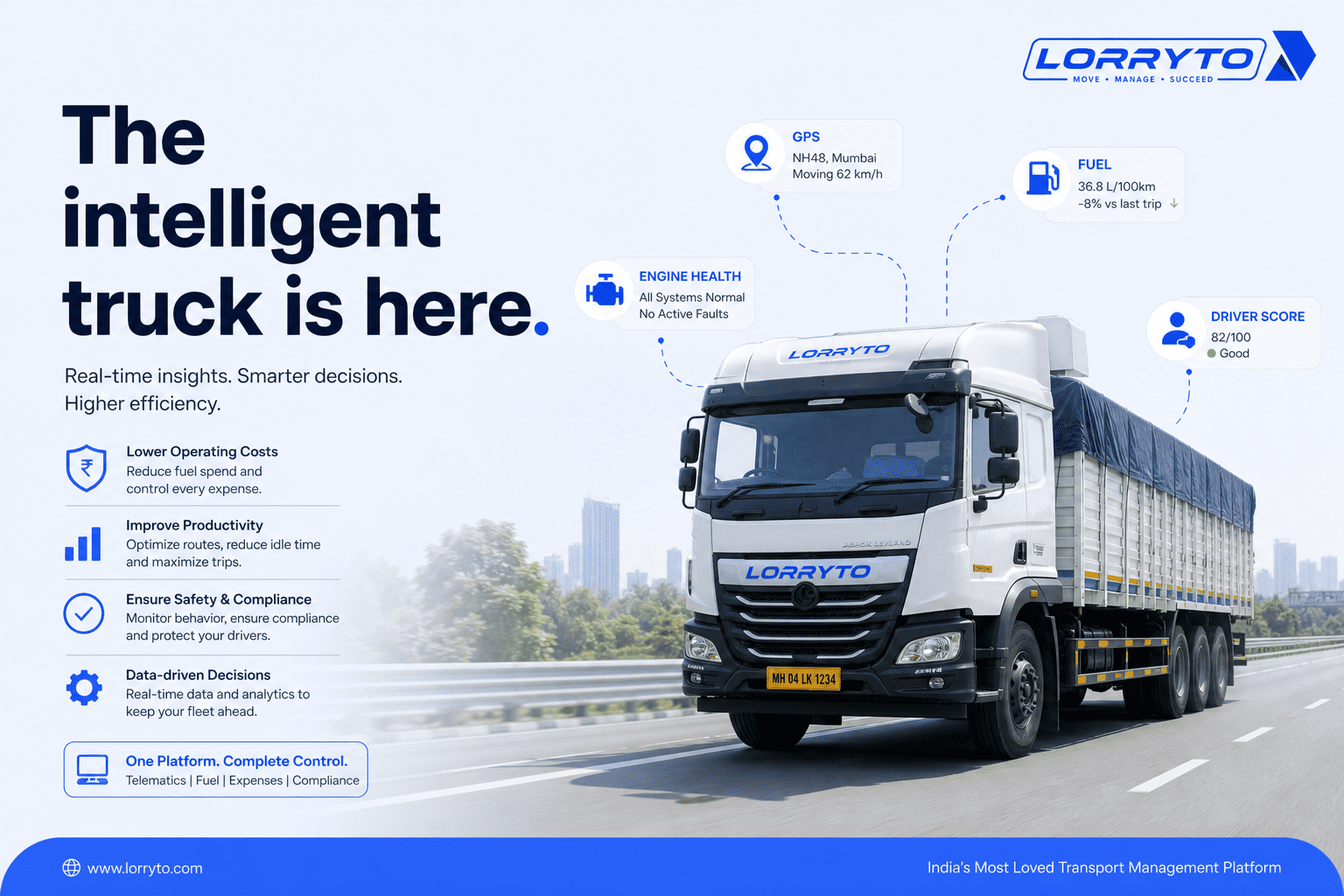
- The Intelligent Truck Is Here: How AI Is Changing the Way Trucks Work
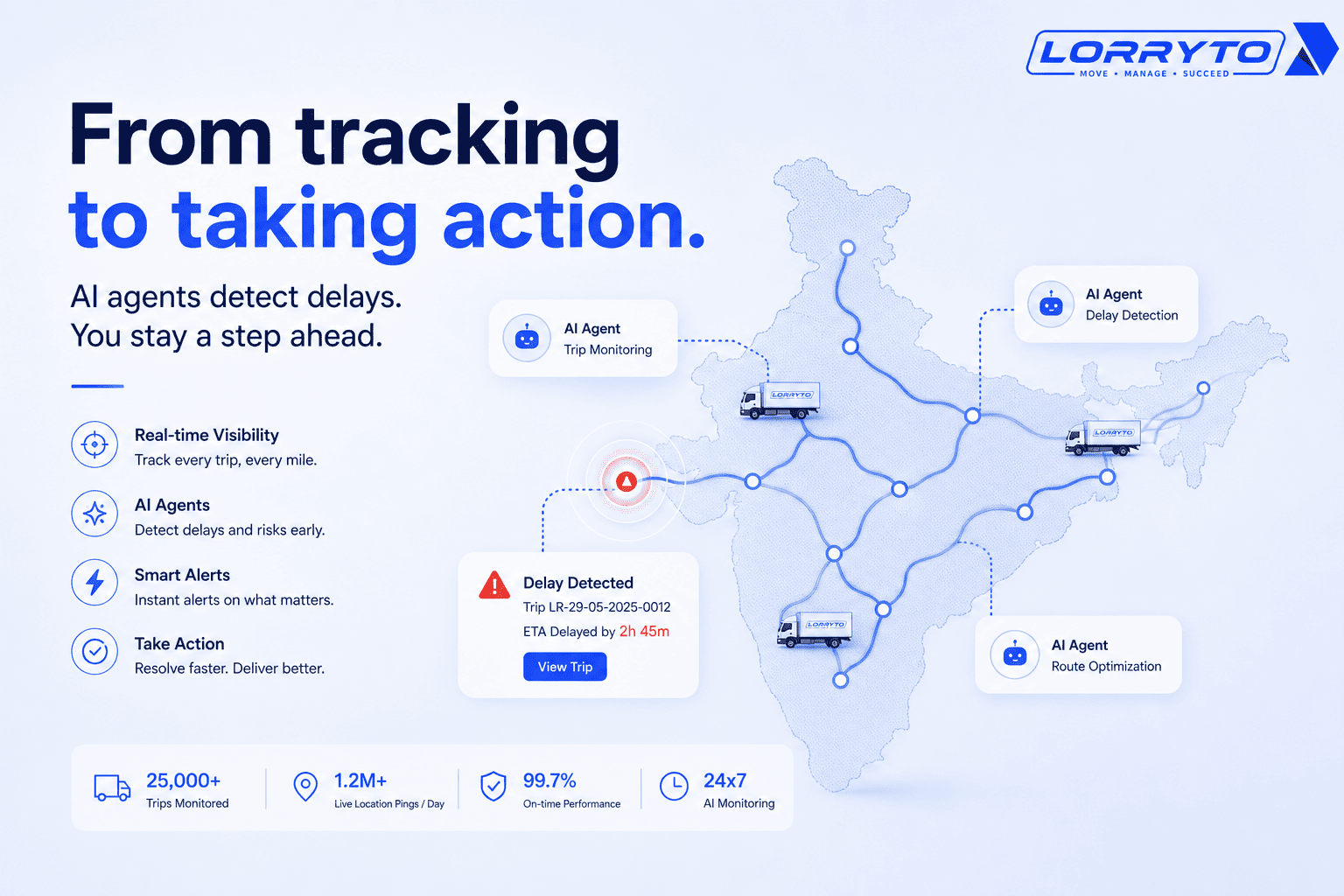
- Agentic AI in Transportation: From Tracking What Happened to Taking Action
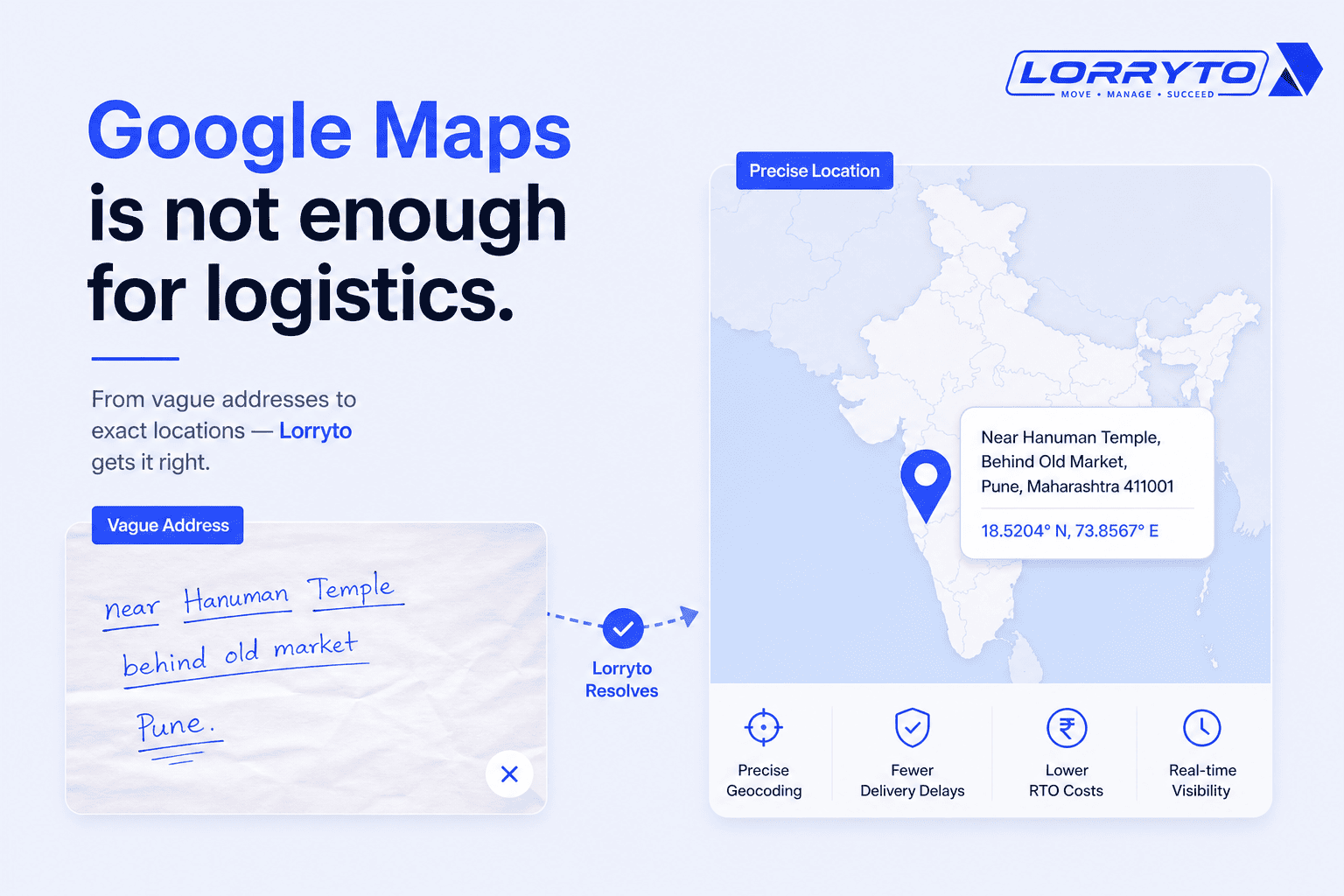
- Google Maps Isn’t Enough for Indian Logistics. Here’s Why AI Maps Matter
- How to Manage Every Trip Tracking Digitally for Indian Transporters
- Vehicles list — location, KPIs, and fleet visibility
Ready to run trips without registers?
Create LRs, track payments, and keep documents in one place with Lorryto — free trial available.
Start Free Now