India’s BRICS Chairship has placed transport, logistics, digitalisation and sustainable infrastructure at the centre of a new cooperation agenda — with real implications for how freight moves and how supply chains are managed.
The global transport and logistics industry is entering a period of significant change.
Supply chains are becoming more interconnected. Businesses want greater visibility. Governments are investing in multimodal infrastructure. And transport operators are increasingly expected to be more efficient, sustainable and technology-driven.
Against that backdrop, the 3rd BRICS Transport Ministers’ Meeting in Nagpur, Maharashtra, in July 2026 marked an important step toward greater cooperation among BRICS member countries.
Under India’s BRICS Chairship, transport ministers unanimously adopted a Ministerial Declaration covering sustainable transport infrastructure, logistics and supply-chain cooperation, transport decarbonisation, Sustainable Aviation Fuel, urban mobility and railway research.
For transport and logistics businesses, the significance goes beyond government-level cooperation. The direction outlined by BRICS points toward a future where digitalisation, multimodal connectivity, supply-chain resilience, sustainability and data-driven transport management become more important — not less.
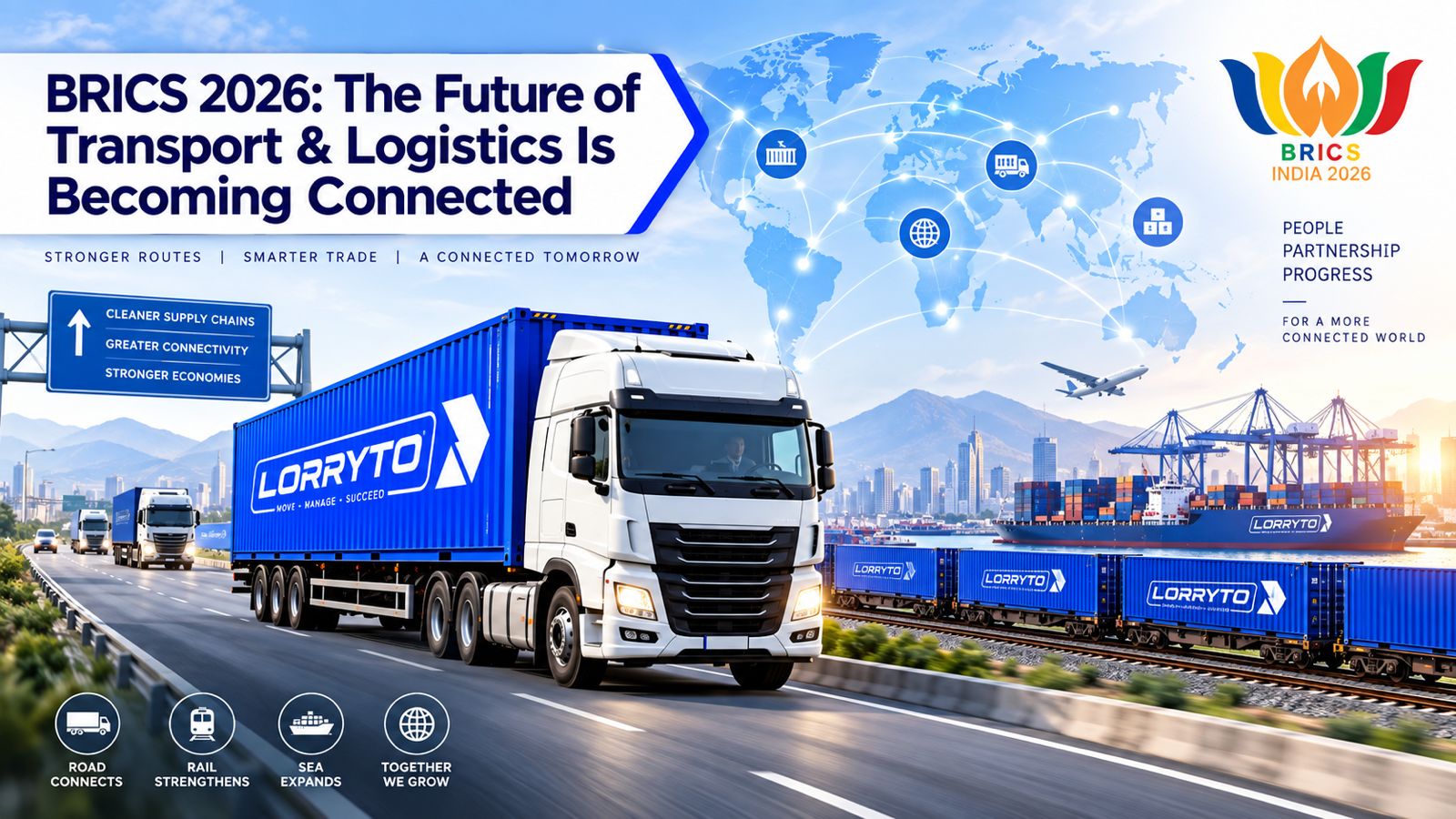
What happened at the BRICS Transport Ministers’ Meeting?
The 3rd BRICS Transport Ministers’ Meeting was held in Nagpur on 11 July 2026 (with the programme often described across 11–12 July), under India’s BRICS Chairship.
It was preceded by a meeting of the BRICS Transport Working Group / senior officials on 9–10 July, where the agenda was prepared and the Ministerial Declaration was finalised before ministers adopted it.
According to the Press Information Bureau, ministers adopted the declaration covering sustainable and resilient transport infrastructure, circular economy principles, Sustainable Aviation Fuel (SAF), transport decarbonisation, urban mobility, logistics and supply-chain cooperation, and railway research.
India’s 2026 BRICS Chairship is being conducted under the theme:
“Building for Resilience, Innovation, Cooperation and Sustainability.”
The transport discussions reflected that theme: how BRICS countries can cooperate to build transport systems that are more resilient, technologically advanced, sustainable and better connected.
In September 2026, BRICS leaders also adopted the New Delhi Declaration (12 September). In that summit document, leaders welcomed the Nagpur transport outcomes, including the logistics cooperation framework, Urban Mobility Hub and further discussion on a Railway Research Network proposal. That endorsement matters — but the day-to-day story for transporters still starts with how logistics and digital operations evolve on the ground.
Logistics and supply chains take centre stage
One of the most significant developments for the logistics industry is the BRICS Logistics Supply-Chain Cooperation Framework.
Ministers adopted the framework as a cooperation platform among BRICS countries. It is best understood as a non-binding space for technical exchange and knowledge sharing — not as a treaty or a new hard institution.
According to the Government of India, it focuses on addressing fragmented supply chains and weak connectivity through areas such as:
- Technical exchange
- Knowledge sharing
- Cargo and shipping services
- Localised manufacturing and assembly ecosystems
- Capacity building
- Environmentally sustainable logistics practices
- Climate-resilient supply chains
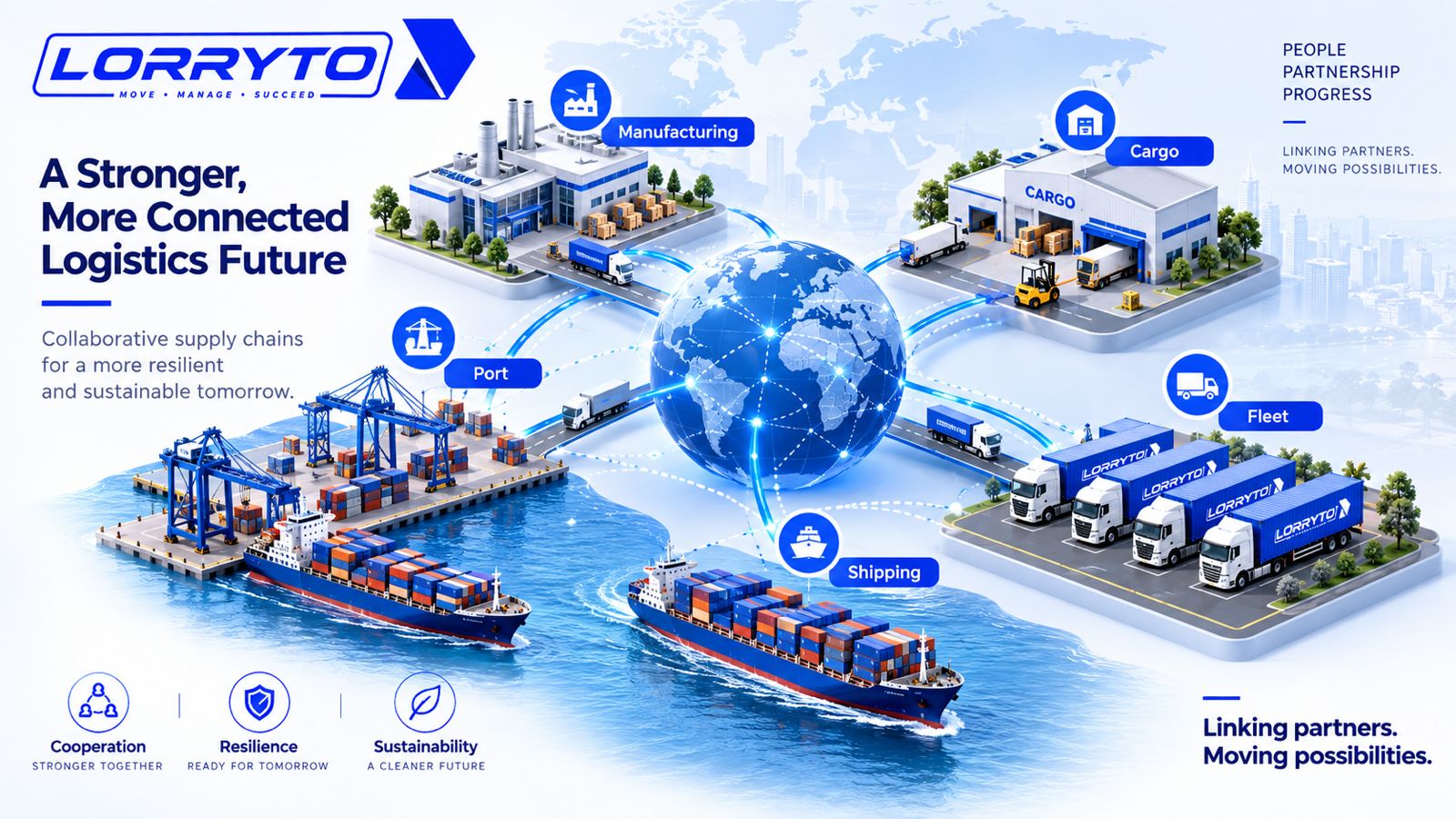
This becomes particularly important as modern logistics depends on coordination across manufacturers, transporters, fleet operators, warehouses, freight forwarders, ports, railways and customers.
A disruption at one point in the chain can affect the entire movement of goods.
The direction emerging from BRICS therefore points toward more integrated and resilient logistics ecosystems — rather than isolated transport operations.
Multimodal transport is becoming more important
Transport systems are no longer being viewed simply as road, rail, air or maritime networks operating independently.
The future is increasingly about connecting different modes of transport.
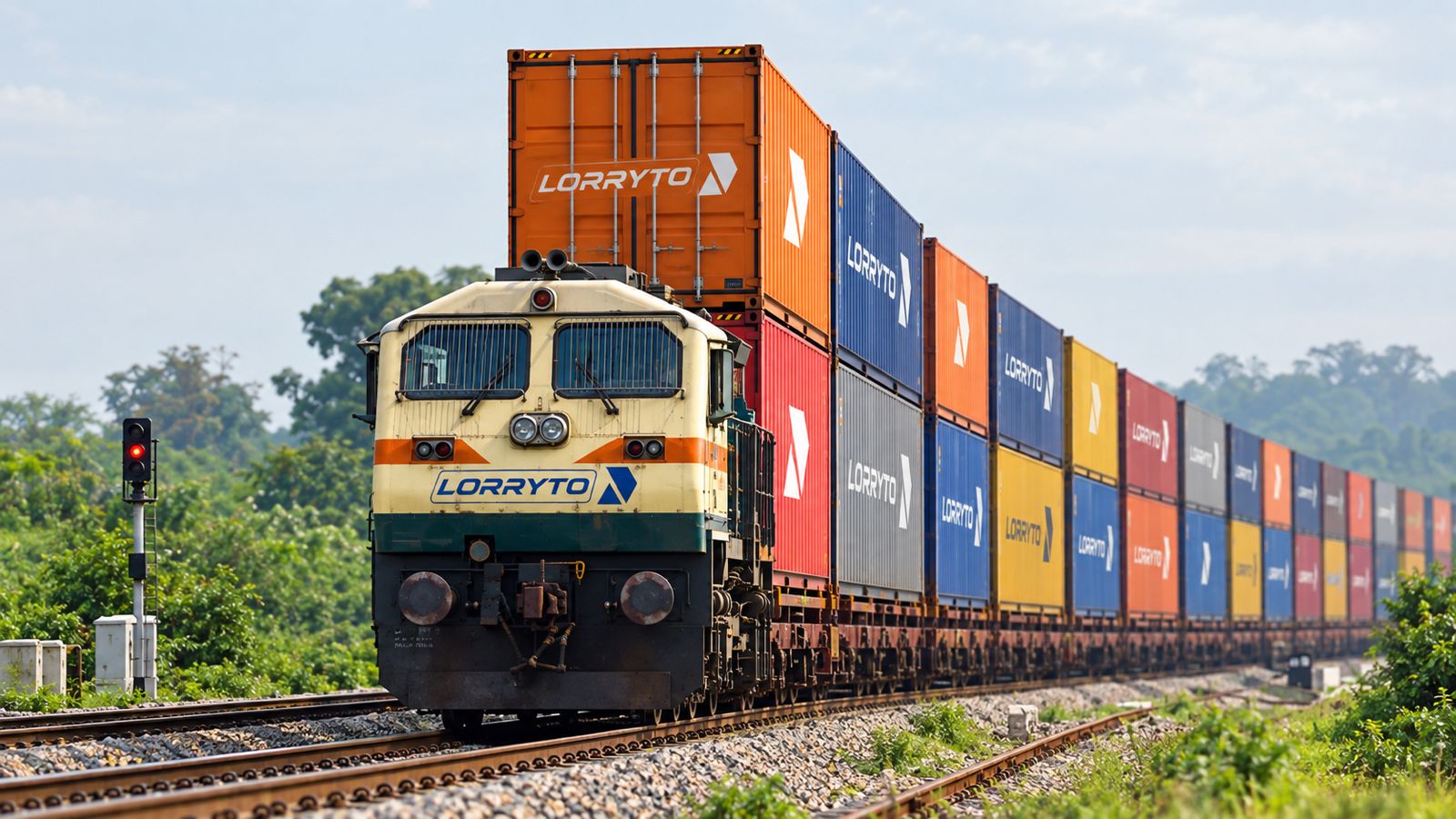
India’s own transport strategy is moving toward multimodal connectivity — integrating road, rail, maritime and aviation infrastructure to improve the movement of people and goods. That shift is already visible in developments such as India’s Dedicated Freight Corridors, where stronger rail freight capacity changes first- and last-mile road roles rather than eliminating trucks.
For logistics operators, this means the traditional question of:
“Where is my truck?”
is gradually becoming:
“Where is my shipment, what stage of the journey is it in, and what happens next?”
That distinction is important.
A modern logistics system needs visibility across the entire transportation lifecycle — from booking and loading to transit, delivery, documentation and payment.
Digitalisation will become a core part of transport
Another important theme emerging from the BRICS transport agenda is the increasing role of technology and digital systems.
The transport sector is becoming increasingly dependent on:
- Real-time tracking
- Digital documentation
- Automated workflows
- Data exchange
- Digital freight management
- Intelligent routing
- Electronic proof of delivery
- Predictive maintenance
- Digital payments
- Analytics and dashboards
The objective is not simply to digitise paperwork.
The larger opportunity is to create connected transport operations where information moves as efficiently as the vehicle itself.
For a fleet operator, this could mean moving from manually checking multiple registers, WhatsApp messages, spreadsheets and documents toward a centralised digital platform — the same direction we covered in why digitisation is transforming Indian transport and digital trip tracking.
This is where transport management software becomes increasingly relevant.
Sustainability is moving from policy to operations
Sustainability was another major component of the declaration.
BRICS countries agreed to cooperate on transport decarbonisation and highlighted the importance of sustainable infrastructure and cleaner technologies, including:
- Alternative fuels
- Electric mobility
- Green hydrogen
- Sustainable aviation fuels
- Low-carbon technologies
- Circular economy practices
- Climate-resilient infrastructure
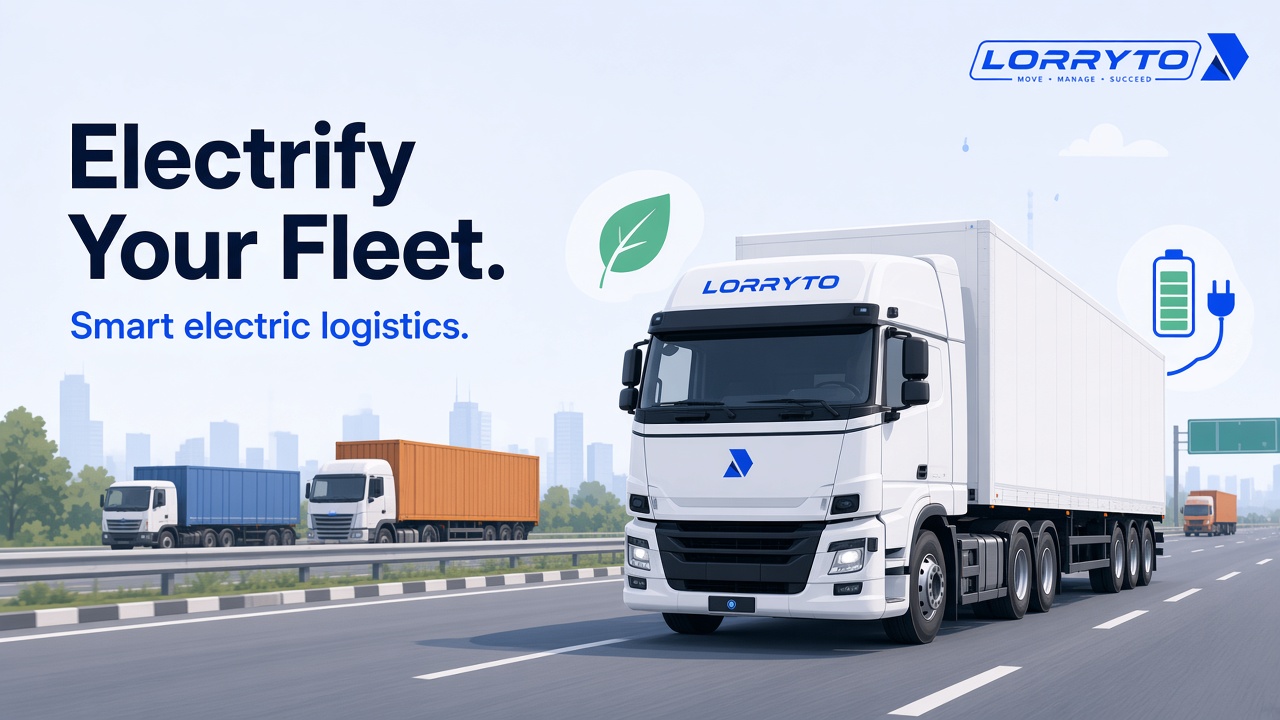
India has also highlighted the use of recycled and alternative materials in road construction, along with cooperation in green hydrogen, electric mobility and alternative fuels. On the freight side, electric truck corridors are already moving from pilots toward real operating questions for fleet owners.
For transport companies, sustainability increasingly intersects with operational efficiency.
Reducing empty kilometres, improving vehicle utilisation, optimising routes, reducing unnecessary fuel consumption and controlling maintenance costs can improve both operational performance and resource efficiency.
In other words:
Efficiency and sustainability are increasingly becoming connected objectives.
The declaration also recognises circular economy principles in transport infrastructure — reducing waste and improving reuse and lifecycle management of materials. Roads, bridges, railways, vehicles, tyres and construction materials all have long operational lifecycles. India has already highlighted examples such as recycled plastic waste, municipal waste, fly ash, steel slag, bamboo crash barriers and end-of-life tyres in road construction.
The broader message is clear: transport infrastructure of the future will need to consider not only how it is built, but also how efficiently its resources are used throughout its lifecycle.
Urban mobility and railway research are also on the agenda
The BRICS transport agenda is not limited to long-distance freight.
The declaration supports establishment of the BRICS Urban Mobility Hub as a collaborative platform for knowledge exchange around accessible, affordable, inclusive and smart urban transport solutions — not necessarily a physical headquarters overnight.
That matters because cities need to move people, commercial goods, e-commerce shipments, food and essential supplies, industrial materials and last-mile deliveries within increasingly congested environments. The future of logistics cannot be separated from the future of urban mobility.
Railways are another part of the emerging framework. The declaration encourages discussion around the proposed BRICS Railway Research Network — accurately described as a proposal under discussion, creating a potential platform for research, knowledge sharing and technical cooperation.
For freight transportation, stronger rail networks can contribute to multimodal logistics by connecting major production centres, logistics hubs, ports and consumption markets.
The larger opportunity is not road versus rail.
It is:
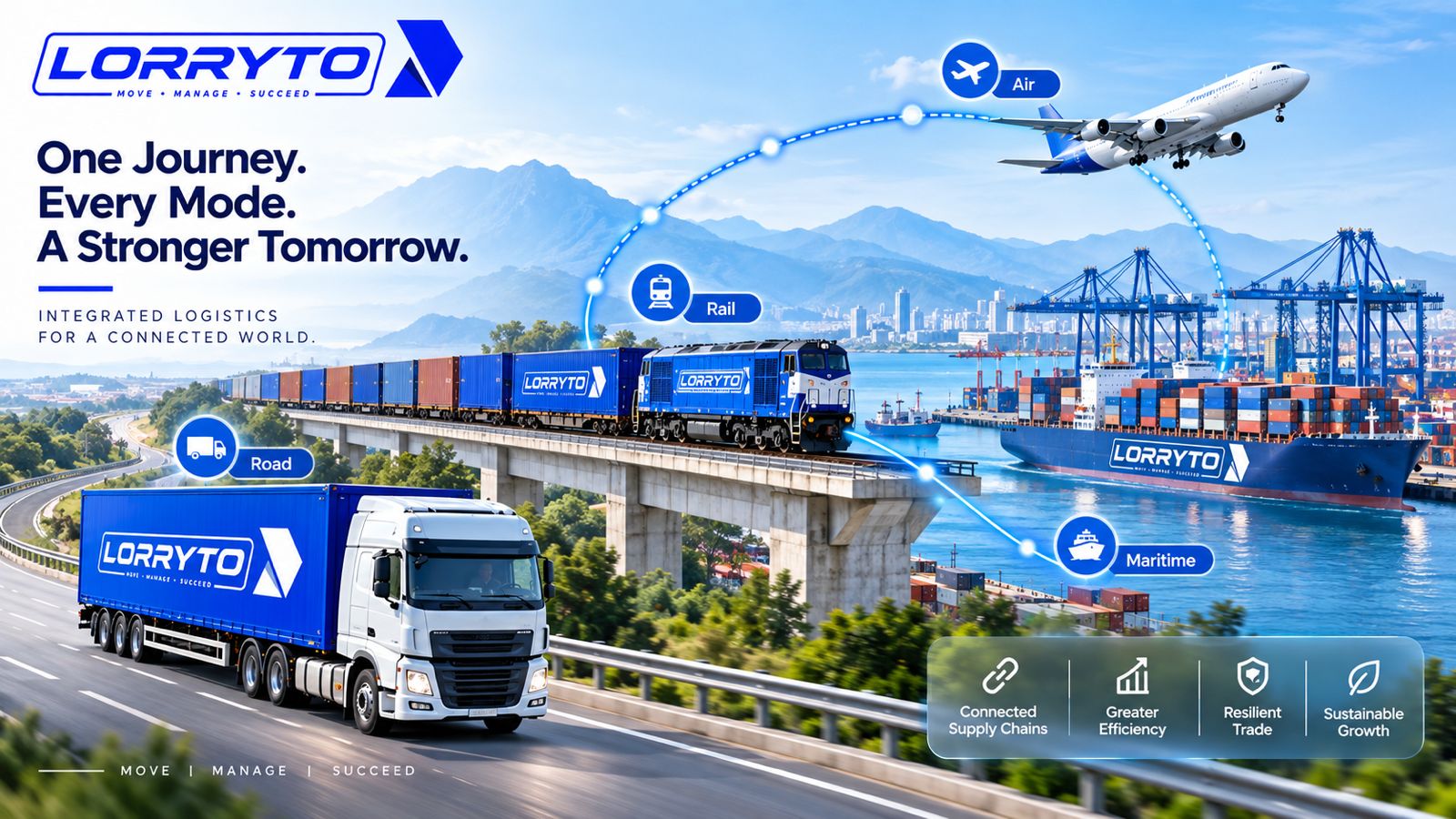
Road + Rail + Maritime + Air = Integrated Logistics
A successful multimodal ecosystem depends on coordination between these modes.
Why this matters to Indian transporters
For India’s road transport industry, these developments are particularly relevant.
India has one of the world’s largest road networks, and road transportation remains a critical component of domestic freight movement.
But transport businesses still face practical challenges every day:
- Vehicle utilisation
- Empty returns
- Fuel expenses
- Toll and FASTag costs
- Driver management
- Document expiry
- POD collection
- Outstanding payments
- Trip profitability
- Vehicle maintenance
- Customer communication
- Multiple branches and vehicles
- Manual paperwork
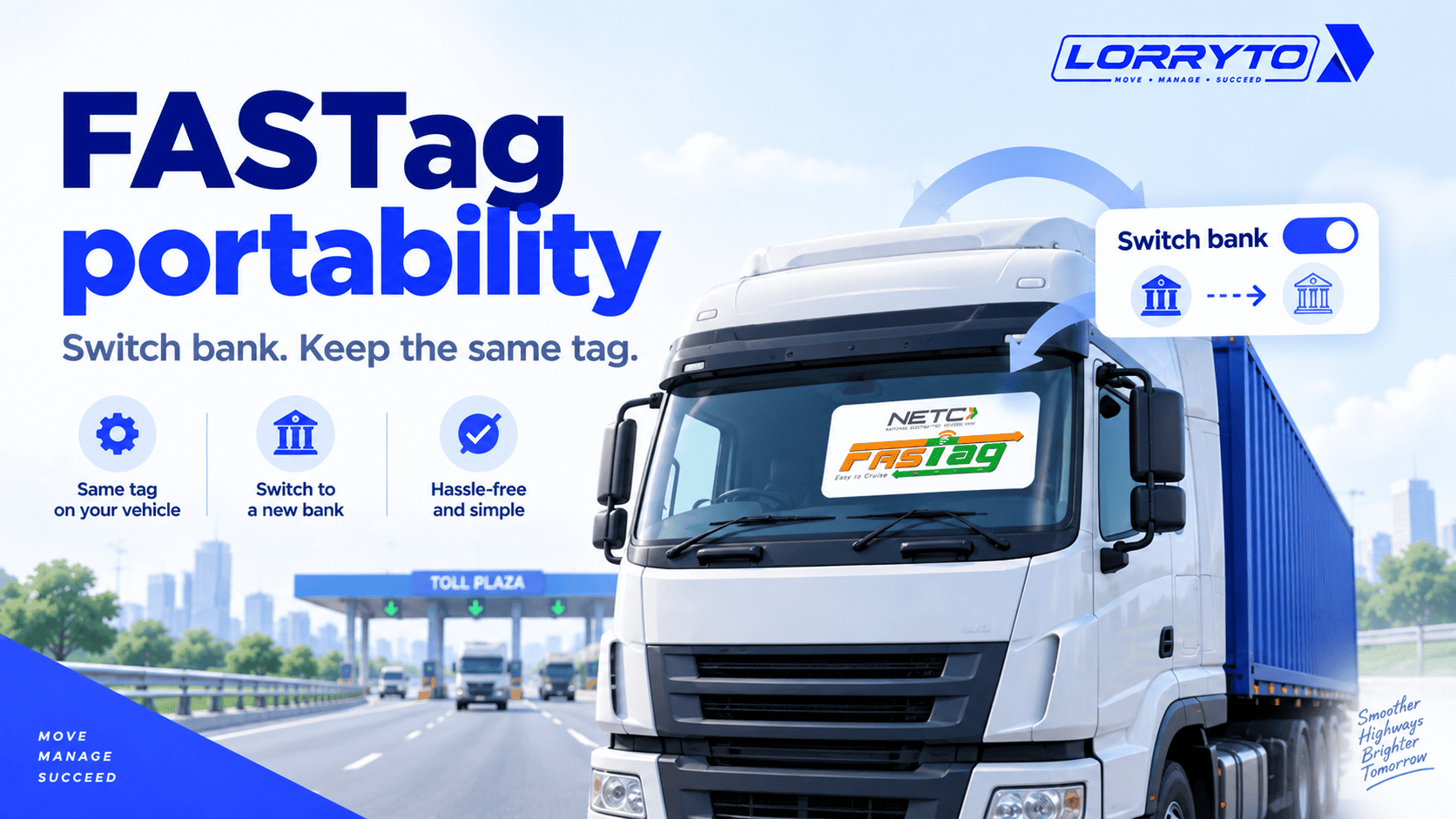
Even highway digitisation steps such as OneTag FASTag bank portability show how infrastructure systems are becoming more flexible — while transporters still need trip-level control of costs, documents and payments.
As the transport ecosystem becomes more connected, these operational challenges increasingly require digital solutions.
The transformation is therefore not only about building larger highways.
It is also about building smarter transport businesses.
From vehicle tracking to complete transport visibility
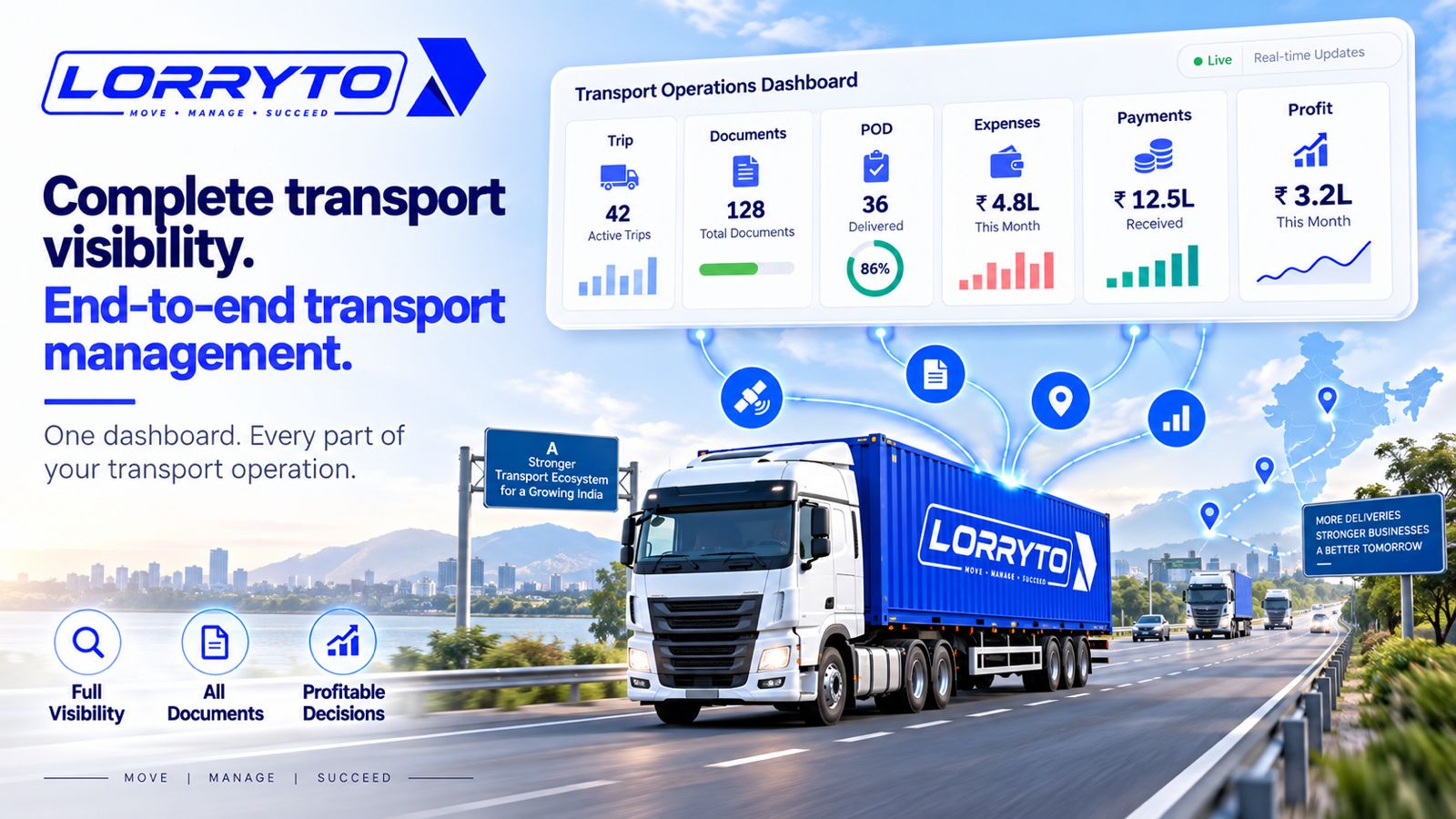
One of the biggest changes taking place in transport technology is the shift from basic vehicle tracking to end-to-end transport visibility.
Knowing the location of a truck is useful.
But a transporter also needs to know:
What trip is the vehicle running?
Which customer does it belong to?
What material is being transported?
What is the expected freight?
How much advance has been received?
Has the POD been uploaded?
What are the trip expenses?
Was the trip profitable?
What payment is still outstanding?
This is the difference between tracking a vehicle and managing a transport operation.
Modern transport management systems bring these operational layers together.
Where transport management software fits in
The BRICS transport agenda is largely focused on policy, infrastructure and international cooperation.
But these changes eventually have to translate into day-to-day operations for transport companies.
A transporter cannot improve supply-chain visibility through policy alone.
The information infrastructure of individual transport businesses also needs to evolve.
A modern Transport Management System can help connect:
Booking → LR/Bilty → Trip → Vehicle → Driver → Documents → Tracking → POD → Invoice → Payment → Profitability
Instead of maintaining separate information across notebooks, spreadsheets, messaging applications and disconnected systems, transporters can increasingly manage these processes from a single digital environment.
That is the broader direction in which the transport industry is moving.
What this means for Lorryto
At Lorryto, we believe the future of transportation is not just about moving vehicles.
It is about managing the entire transport operation intelligently.
The direction outlined by the BRICS transport agenda reinforces several capabilities that are already becoming central to modern transport management:
- Digital transport operations
- Real-time visibility
- Document management
- Trip-level profitability
- Payment and outstanding management
- Vehicle and driver management
- Data-driven decision-making
For Indian transporters, digitalisation does not have to mean adopting complicated enterprise systems.
It can start with something much simpler:
Know your vehicles. Know your trips. Know your documents. Know your expenses. Know your payments. Know your profit.
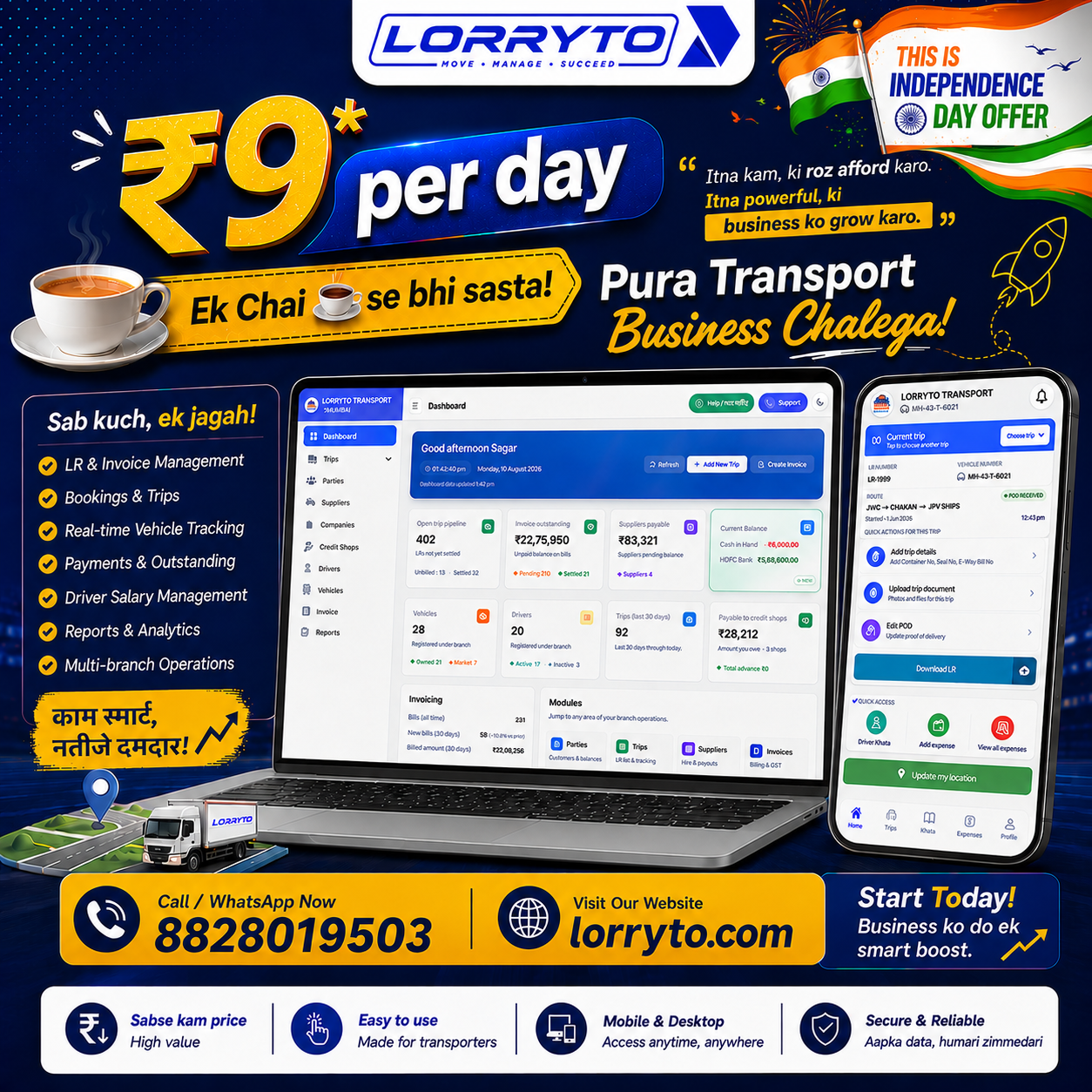
For example, platforms such as Lorryto help transport businesses track vehicle locations when drivers share GPS and manage trip and vehicle-level revenue and expenses on the Vehicles list.
That is the foundation of a smarter transport business.
What the BRICS agenda could mean for the future of Indian logistics
The July declaration should not be interpreted as an immediate change to the daily operations of every transporter.
Rather, it represents a longer-term policy direction toward:
More connected logistics
Supply chains will increasingly depend on information sharing and coordination between different stakeholders.
More multimodal transportation
Road, rail, maritime and aviation networks will increasingly need to work together.
More digital operations
Manual processes will increasingly give way to digital documentation, tracking, analytics and communication.
More sustainable transport
Fuel efficiency, alternative fuels, electric mobility and lower-carbon infrastructure will become increasingly important.
More resilient supply chains
Businesses will need better visibility and contingency planning to deal with disruptions.
More data-driven decision-making
Transport companies will increasingly need operational data to understand costs, utilisation, profitability and performance.
The road ahead: from transport management to transport intelligence
The BRICS transport declaration provides an indication of how governments are thinking about the next phase of mobility and logistics.
The emphasis is moving toward resilience, connectivity, sustainability, innovation and cooperation.
For the logistics industry, this creates a larger question:
Can transport businesses become as digitally connected as the infrastructure they operate on?
The answer will increasingly depend on how quickly transport operators adopt technology.
The future transporter may not simply manage a fleet.
They may manage a connected digital logistics operation where vehicles, drivers, documents, customers, payments, routes and profitability are visible through one integrated system.
The transformation of transportation is therefore happening at two levels simultaneously:
Infrastructure is becoming smarter.
Transport operations need to become smarter too.
And for India’s millions of transport and logistics businesses, that transition could become one of the defining changes of the coming decade.
Final takeaway
The 2026 BRICS Transport Ministers’ Declaration is more than a discussion about roads, railways or aviation.
It reflects a broader shift toward integrated, resilient, sustainable and technology-enabled transportation.
The adoption of the BRICS Logistics Supply-Chain Cooperation Framework, the focus on transport decarbonisation, the Urban Mobility Hub and the proposed Railway Research Network all point toward greater cooperation and connectivity across the transport ecosystem — a direction later welcomed by BRICS leaders in the New Delhi Declaration.
For transport businesses, the message is equally relevant:
The future of logistics will not be defined only by how fast goods move. It will also be defined by how intelligently the entire movement is managed.
And that is where digital transport management becomes increasingly important.
If you are still building the trip, document and payment visibility that a more connected logistics world expects — getting started with Lorryto is a practical place to begin.
Related reading
- India’s Freight Rail Network Is Changing Road Transport: What the Dedicated Freight Corridors Mean for Truckers
- Electric Trucks Are Leaving the Pilot Stage: Is India Ready for Electric Freight Corridors?
- FASTag Is Becoming Portable Like a Mobile SIM: What OneTag Means for India’s Truckers and Fleets
- How to Manage Every Trip Tracking Digitally for Indian Transporters
- Why Digitization Is Transforming the Transport Industry in India
- Vehicles list — location, KPIs, and fleet visibility
Ready to run trips without registers?
Create LRs, track payments, and keep documents in one place with Lorryto — free trial available.
Start Free Now